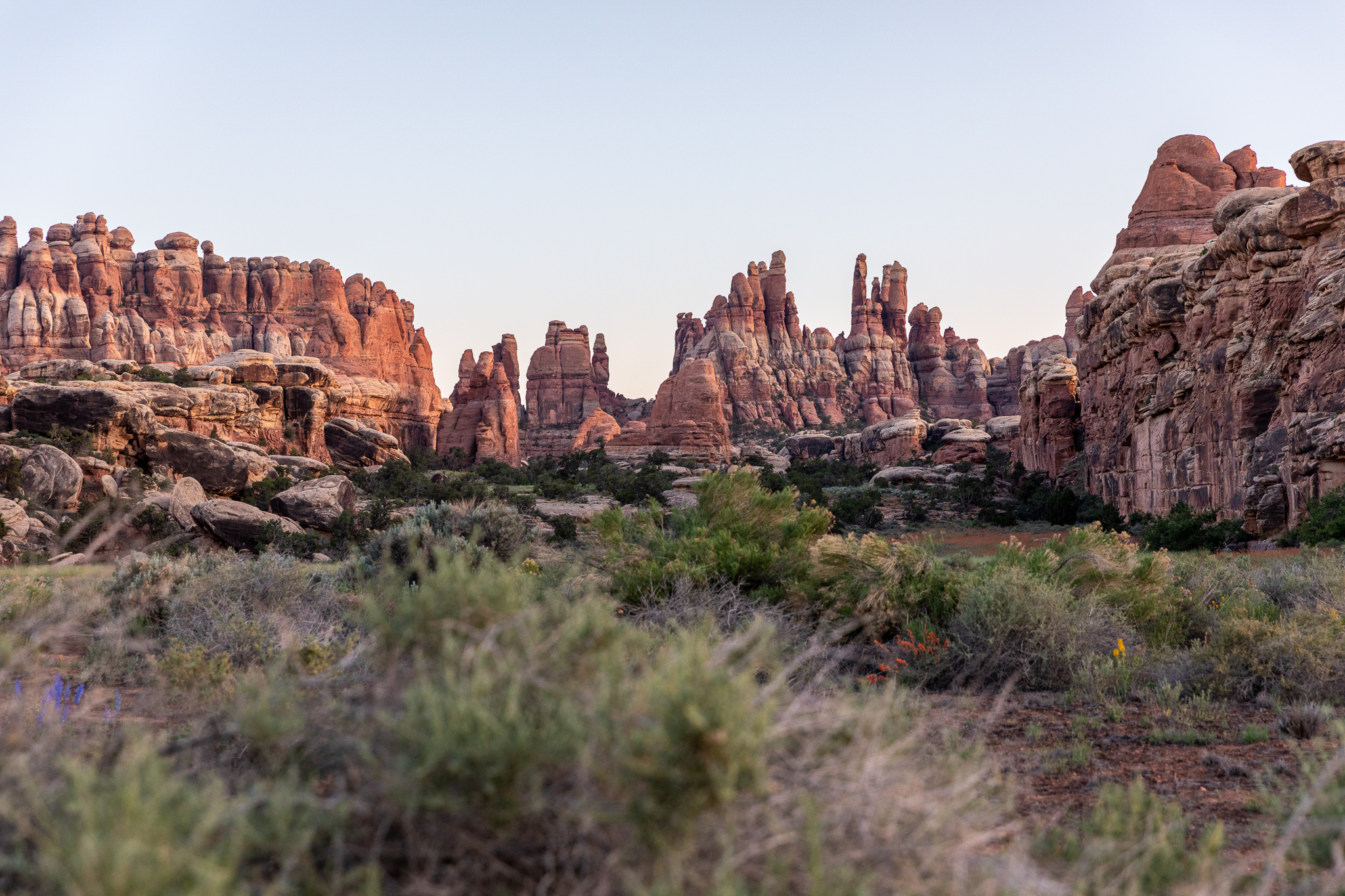
One of my favorite national parks is Canyonlands National Park. The confluence of the Green and Colorado Rivers is the center of the park, dividing it into three distinct and disconnected districts. To the north of the Colorado and east of the Green lies the most visited district of the park: Island in the Sky. To the west of the Green and the north of the Colorado lies The Maze, which is one of the most remote places in the lower 48 states. To the south and east of the Colorado river lies The Needles. It’s not as easy to access as Island in the Sky, with its paved roads and close proximity to Moab. It’s not nearly as remote as The Maze, which takes a full day of technical driving to reach.
The Needles is still full of challenges and is not a place for inexperienced drivers or vehicles without the right capabilities. It’s filled with steep grades, large obstacles, off-camber drops, and paint-scraping narrow sections. Elephant Hill (the way both in and out of The Needles) has a switchback so tight it can only be navigated in reverse. If you get stuck here, a tow truck will cost more than $2,000. Group sizes are strictly limited to keep noise and dust down, to minimize wildlife disruptions, and to let the sights and sounds of nature prevail.
There are some amazing campsites in The Needles and they all require a permit. Even single day-use requires a permit. The permits are highly sought after and become unavailable several months in advance. Some popular days and popular spots get reserved within minutes of being released.
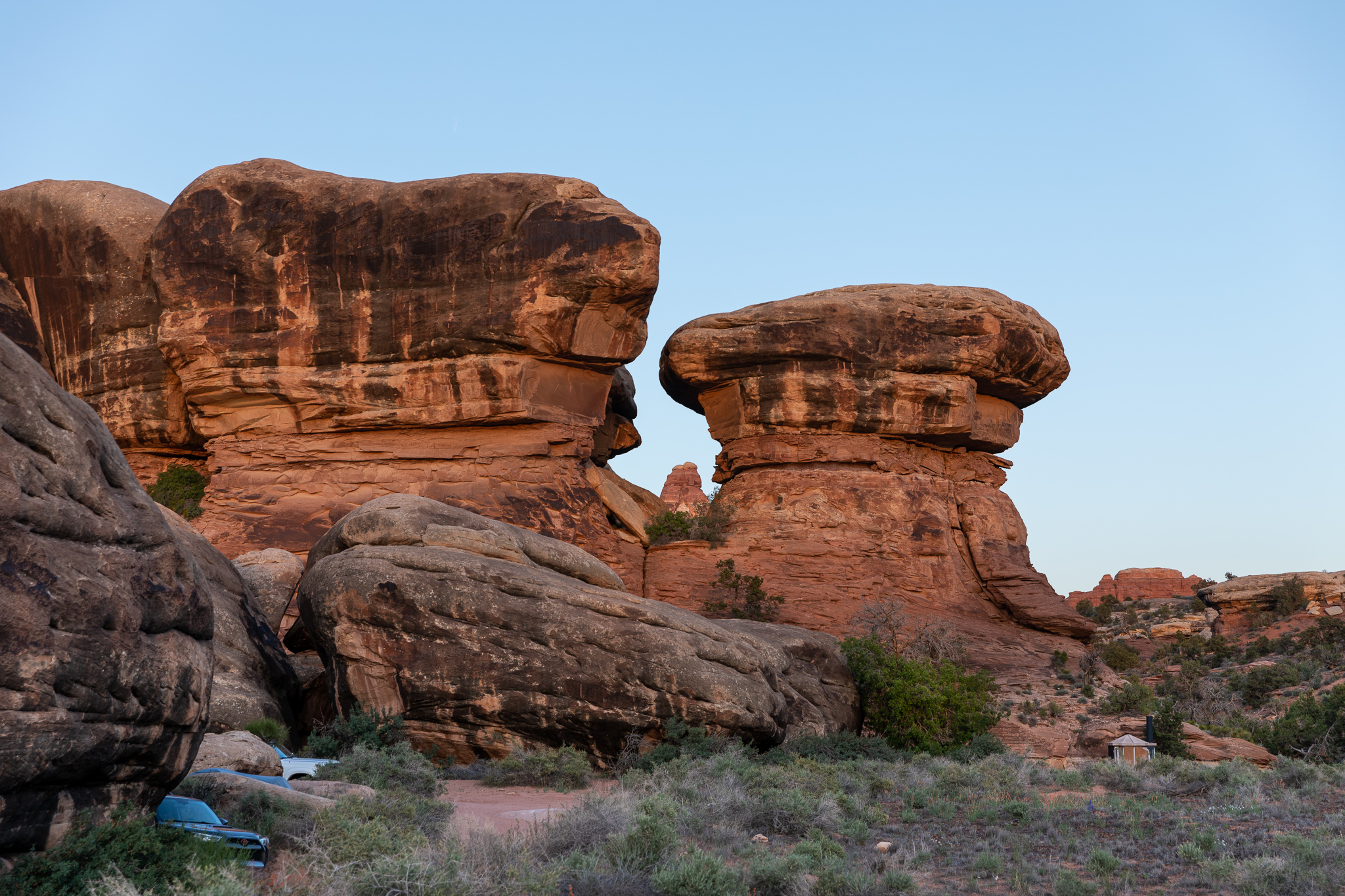
Brett, Jess, and Mark each reserved a campsite in the Devil’s Kitchen campground in The Needles over Memorial Day weekend. There are only 4 total campsites in Devil’s Kitchen, so between the three of them they had reserved almost the entire campground. It’s a really special place with spectacular views. Each reservation allows for up to 10 people and 3 cars but the rangers reminded us of the group size limitations in the park. They don’t want to see multiple groups moving together as one larger group.
Big Groups Are Bad
I am not a fan of large groups when camping. Despite my love for Canyonlands, when I heard there would be as many as 30 people camping with us, I did my best to get out of it. I love Devil’s Kitchen and the hikes in The Needles, but I really don’t like activities with so many people. Especially when the logical divisions in the groups don’t align with the campsite restrictions. Charmaine had just been backpacking and camping through The Needles, but she really wanted to go back and show me some of the cool places she had just been. We had also invited my brother Joe to camp with us. I tried to persuade him to camp with us somewhere else this weekend, but he was pretty excited about The Needles. So once it was clear I wouldn’t be able to get out of it, I tried to make the most of it.
To enter The Needles, we drove south from Moab for about 40 miles on highway 191 and then west for another 35 miles on highway 211. We passed several nice looking campgrounds just off of highway 211. We stopped briefly at Newspaper Rock and then continued down towards The Needles. As we were just about to enter The Needles, there’s a small outpost where we stopped to top off our gas (at $10/gallon) and buy a few last-minute items before heading into the park. I didn’t use more than about 1/3 of my gas in the park, so I would like to avoid stopping at the outpost on future trips, but I doubt that will happen. We always seem to be part of a group where someone is concerned about gas, so I’m sure we’ll just keep paying the premium for a little peace of mind.
Elephant Hill
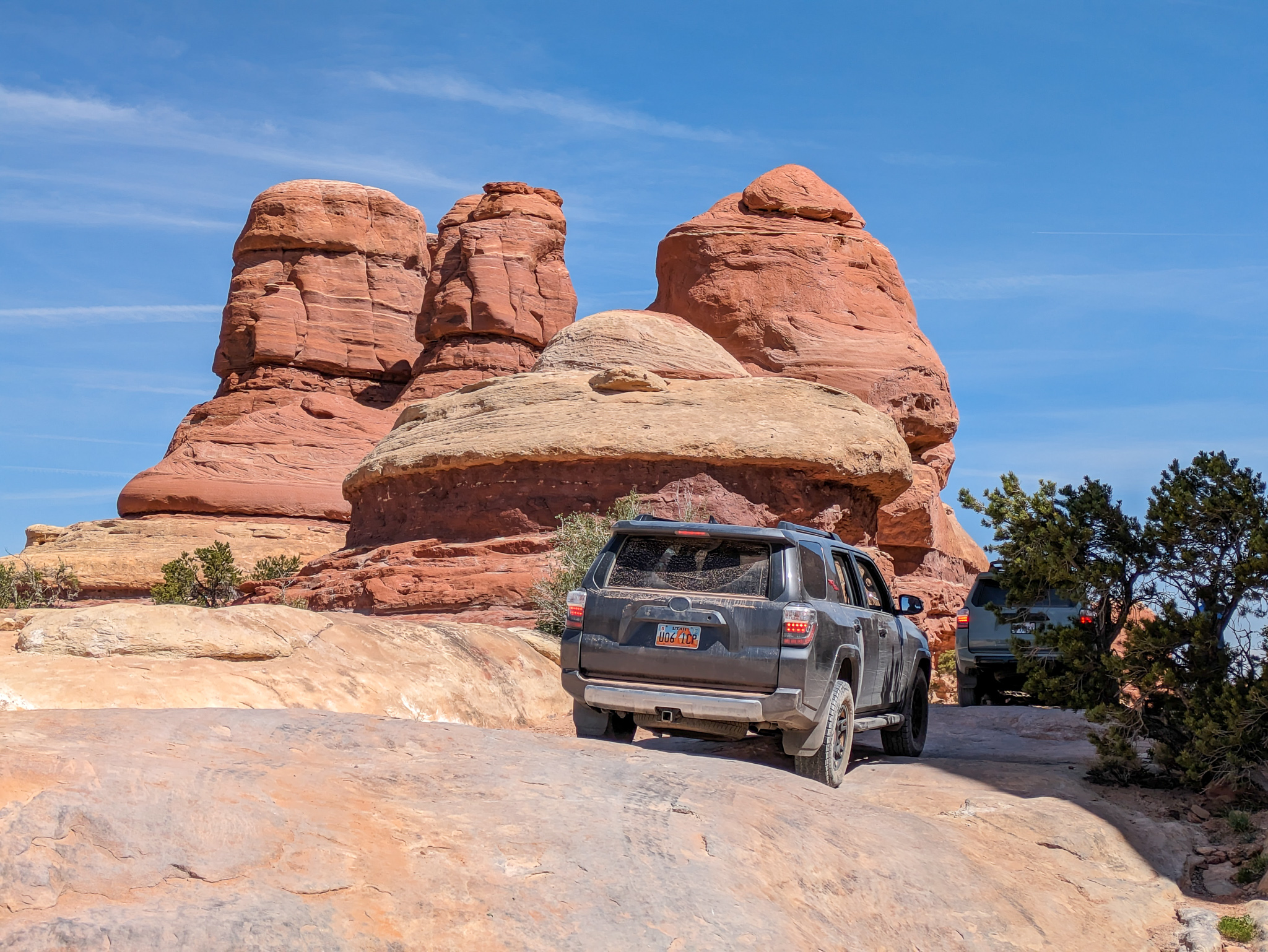
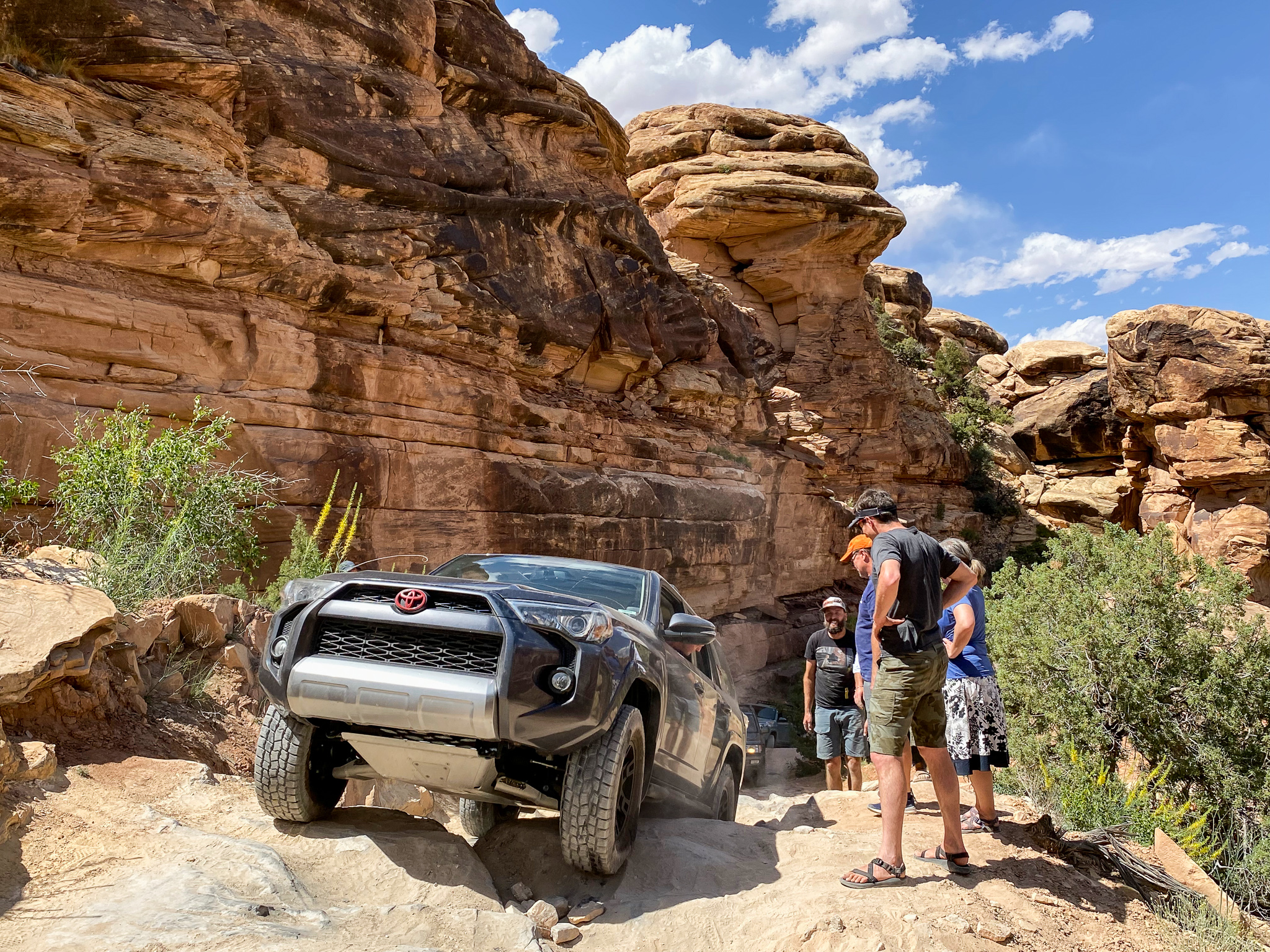
Not long after entering the park it was time to air down and climb our first obstacle - Elephant Hill, the gatekeeper of The Needles distrcit of Canyonlands. If you want to drive anywhere in The Needles, you have to drive up and over it. Elephant Hill is famous for having a switchback so tight that you cannot make the turn and shouldn’t even try. Instead, you drive all the way into the corner, put your rig in reverse, and drive up the next section in reverse. You reverse all the way into the next corner and then go back to driving forward again. It’s really not difficult, but it is something most drivers have never had to do, so it gets talked about a lot and probably has a reputation for being technical or difficult. Maybe that’s why I always expect it to be more challenging than it is. I pretty much just drove straight up and over it this time. Of course, I was following good lines selected by the experienced drivers in front of me.
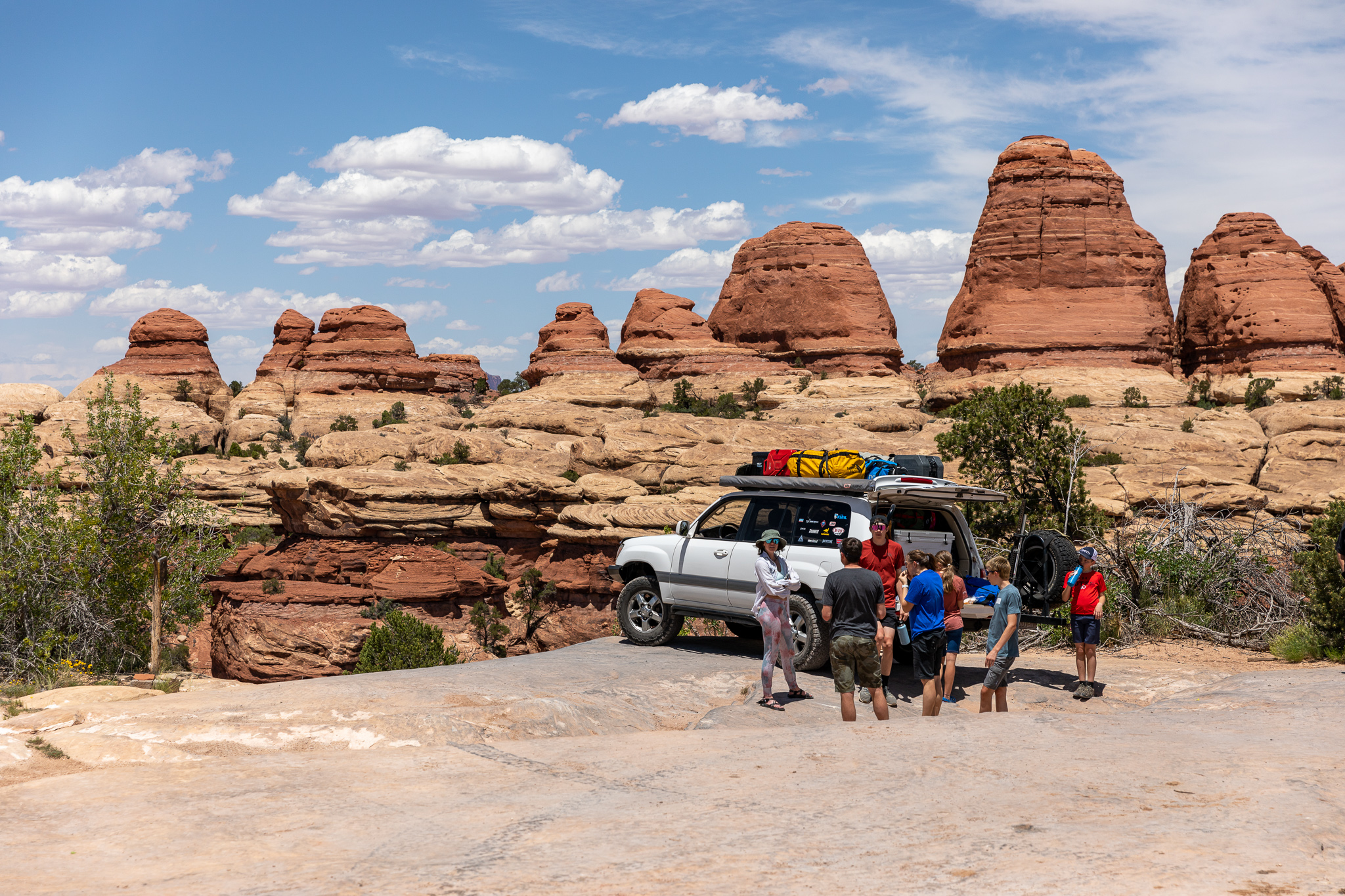
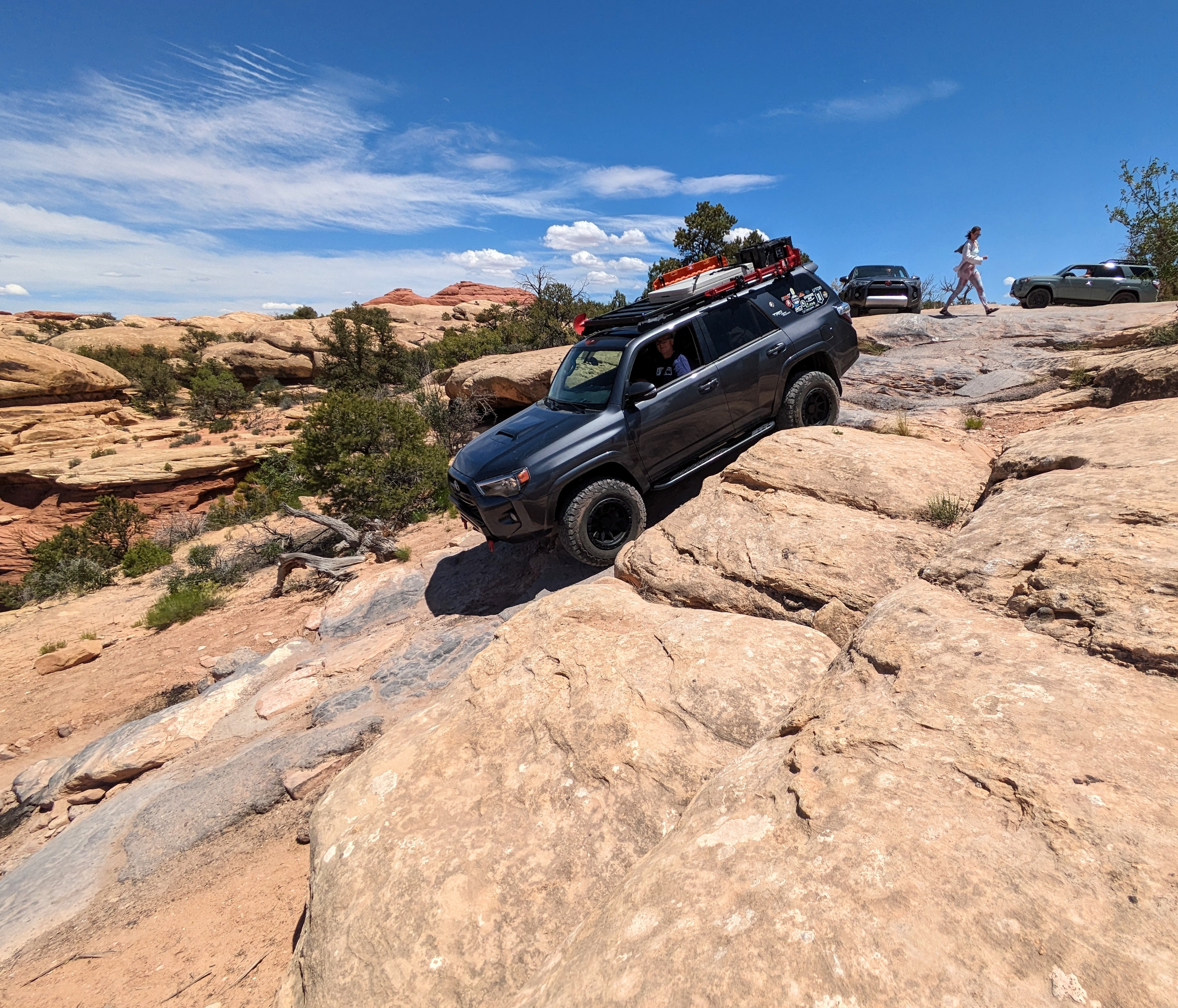
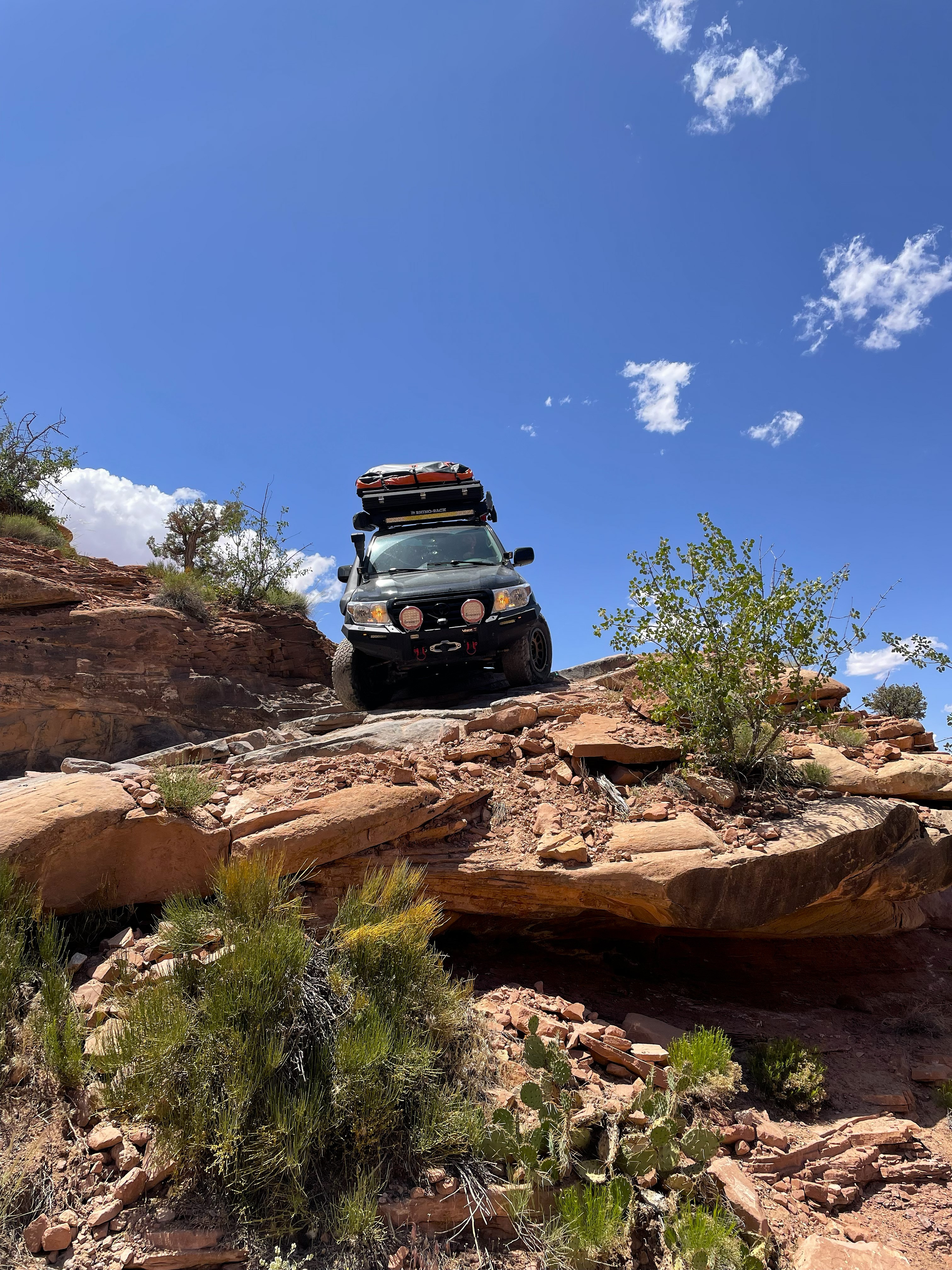
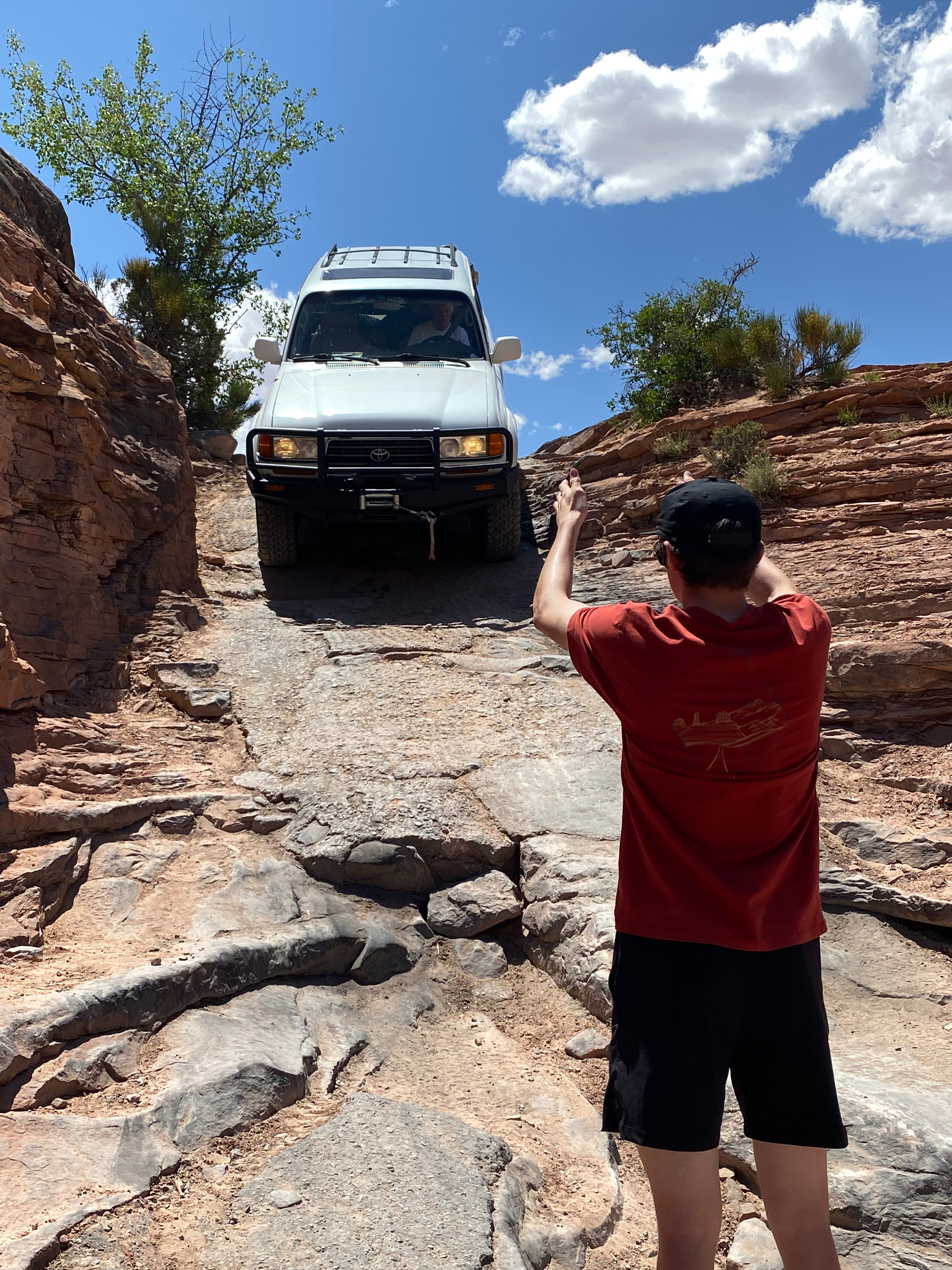
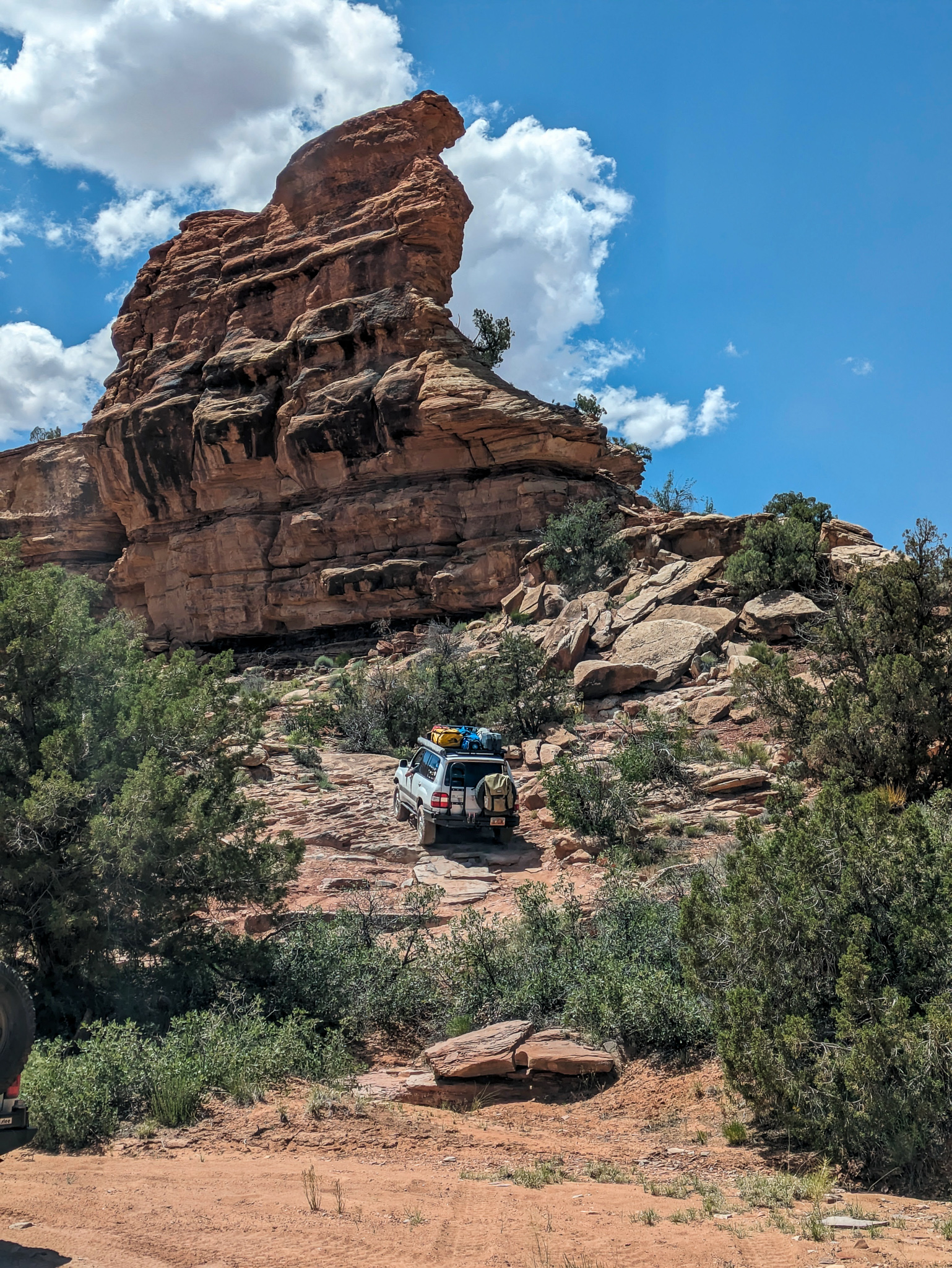
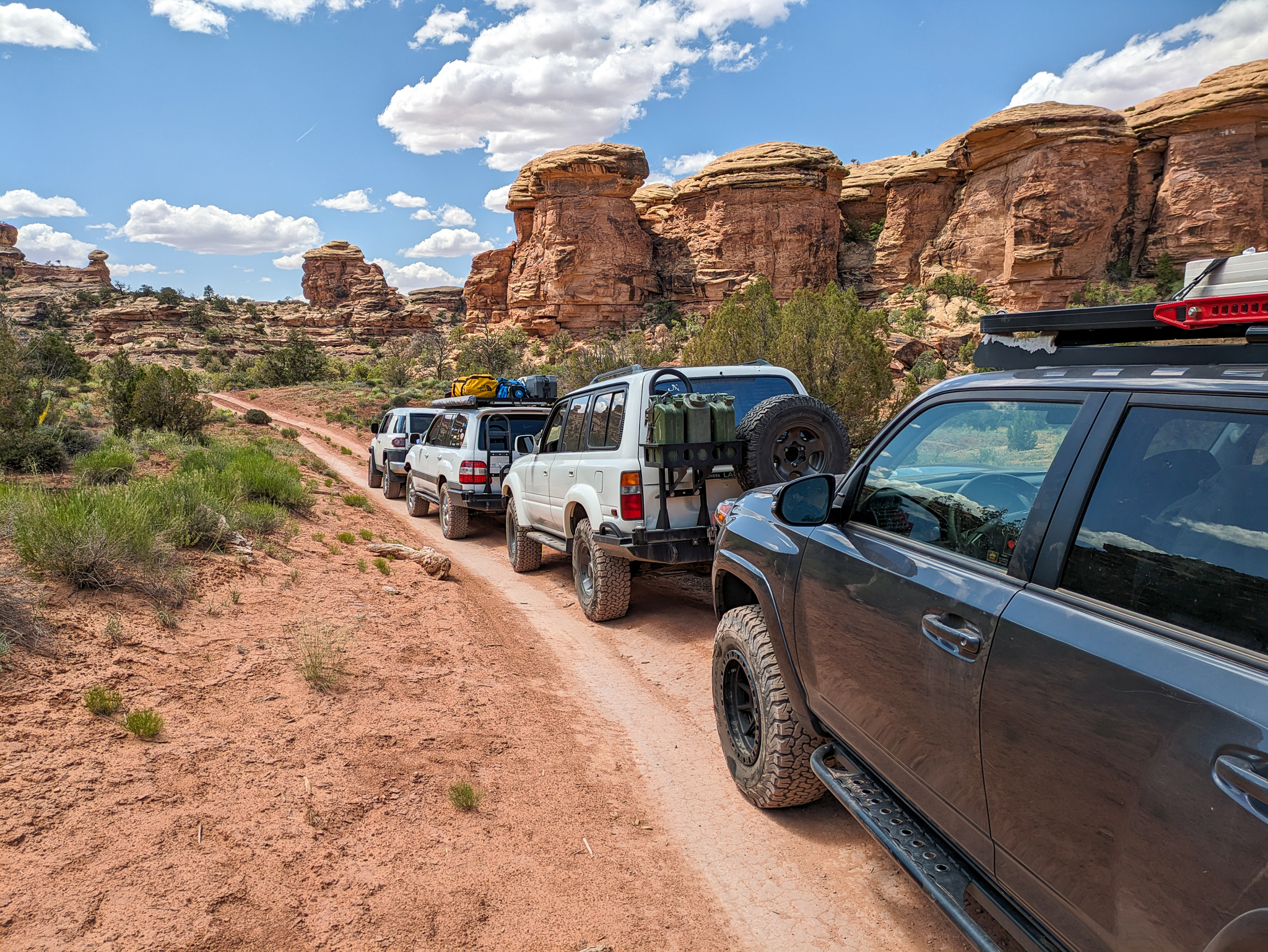
We stopped at the top for some lunch before dropping down the steep side of the hill. I benefited from a host of volunteer spotters going down, and the 4Runner made quick work of the hill. There is another climbing section right after that, and then the road splits into two one-way sections. Coming in from our right is the one-way section that brings vehicles back to Elephant Hill so they can go home. To the left is the one-way section that leads to everything inside The Needles, and that’s the way we went.
The Squeeze
At the end of the one-way section going into the park is another famous obstacle - The Squeeze. This is an extremely tight pass (8 feet wide?) through the Devil’s Pocket. It’s the type of pass where you have to pull your mirrors in or the walls will do it for you. The rock walls are vertical, but the ground beneath your vehicle is not level, which can cause the vehicle to lean and scrape against the unforgiving rock walls. Avoiding that fate means turning toward the very wall your vehicle is starting to lean into. It’s not intuitive. It doesn’t feel right. You have to have a good spotter telliing you to make that choice. Not trusting your spotter can mean grinding more than just your mirrors. You may grind your fenders and doors. You may even become wedged in. Luckily, Brett is the master spotter and has guided dozens of vehicles through without a scratch.
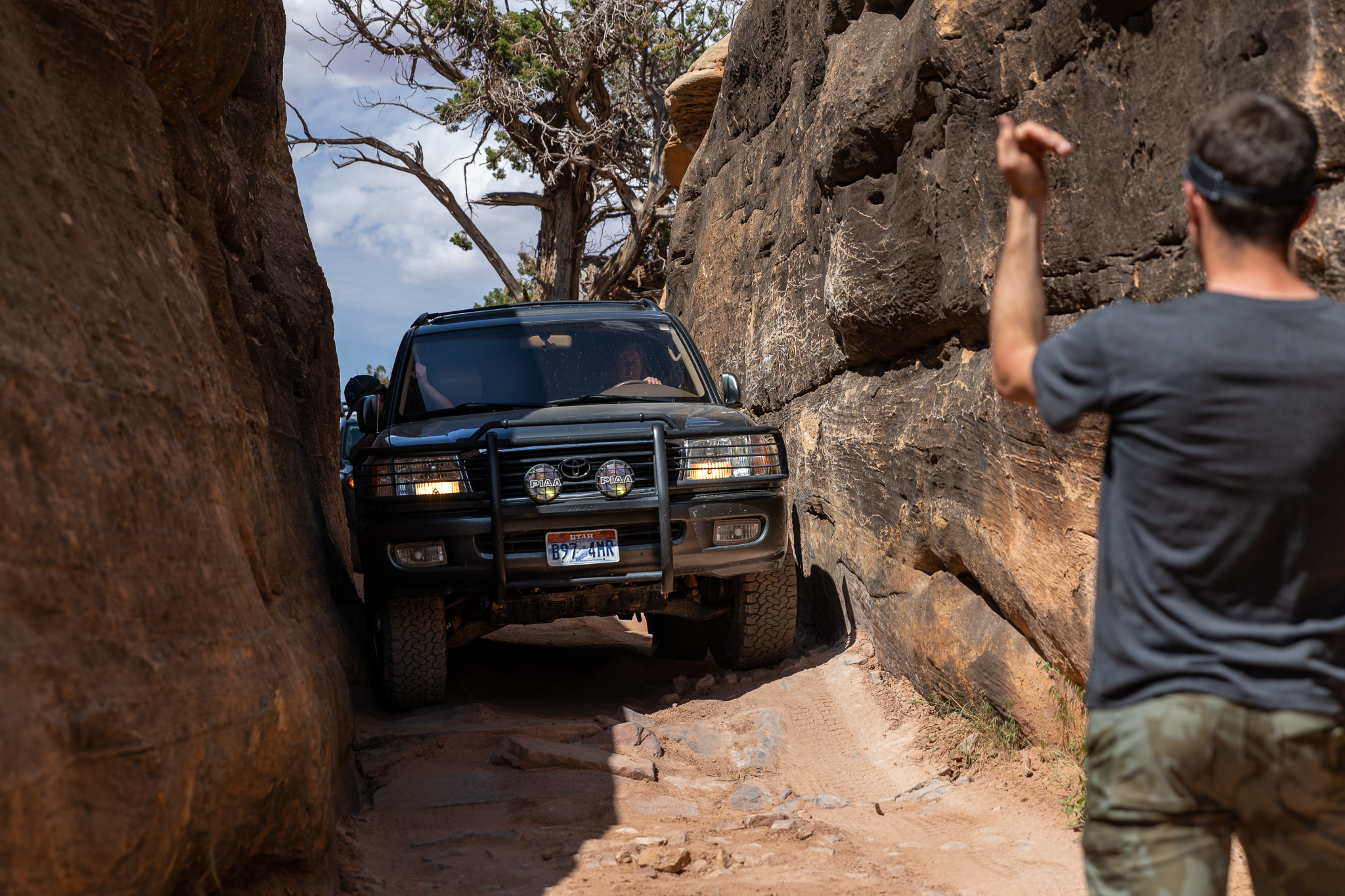
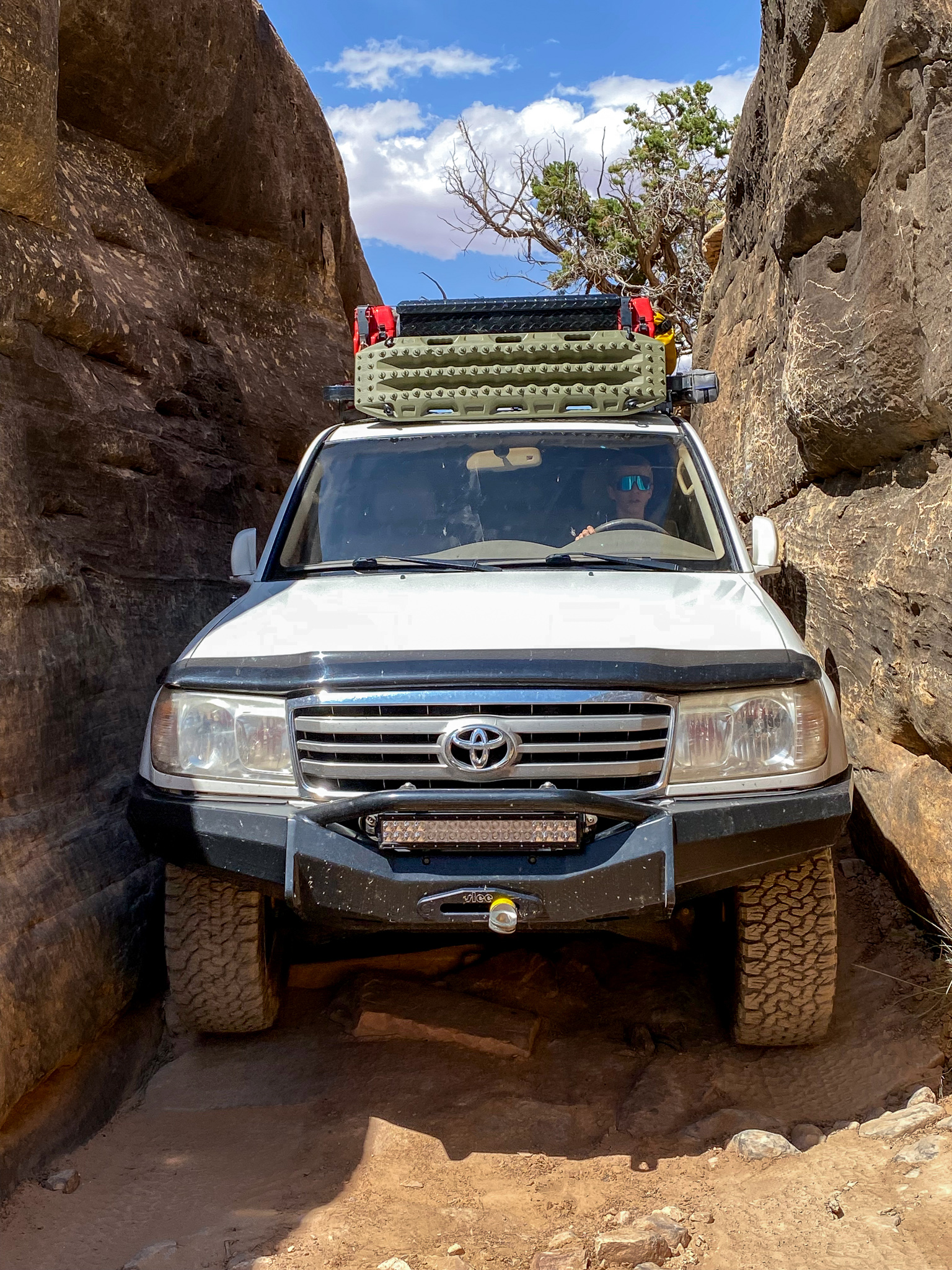
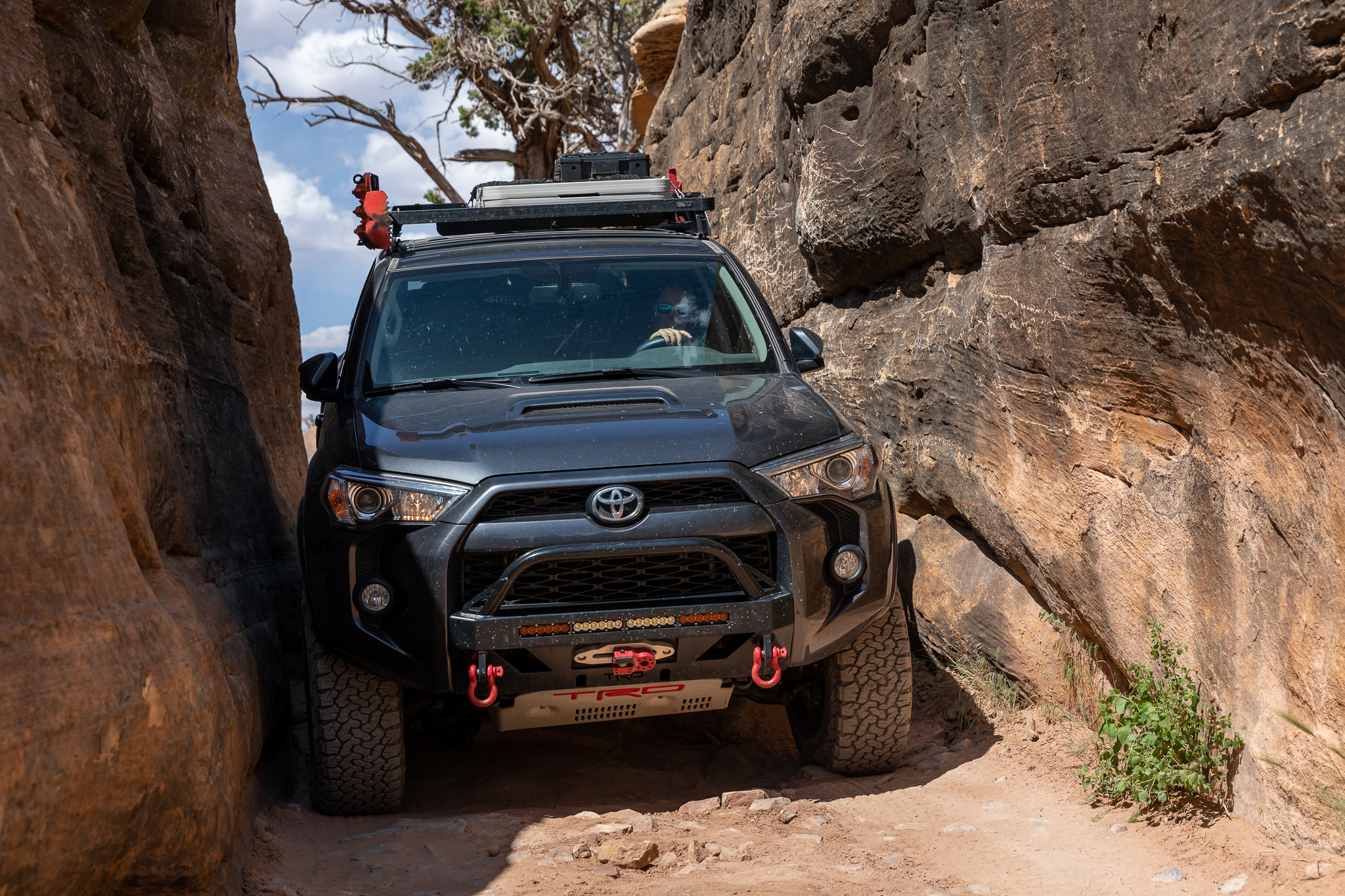
There is a sharp turn at the exact moment that the walls start to open up. It’s very satisfying to make it through unscathed. I have really enjoyed driving through The Squeeze on previous trips and I wanted Charmaine to have that same experience. She drove through like a boss - never going too fast, doing all the things her spotter suggested - making it look so easy. Everyone in our entire group made it through without incident. In fact, I don’t remember anyone ever scratching their rig any of the times we have been through here. And one year that included a full-size Toyota Tundra. So trust your spotter.
Devil’s Kitchen Campground
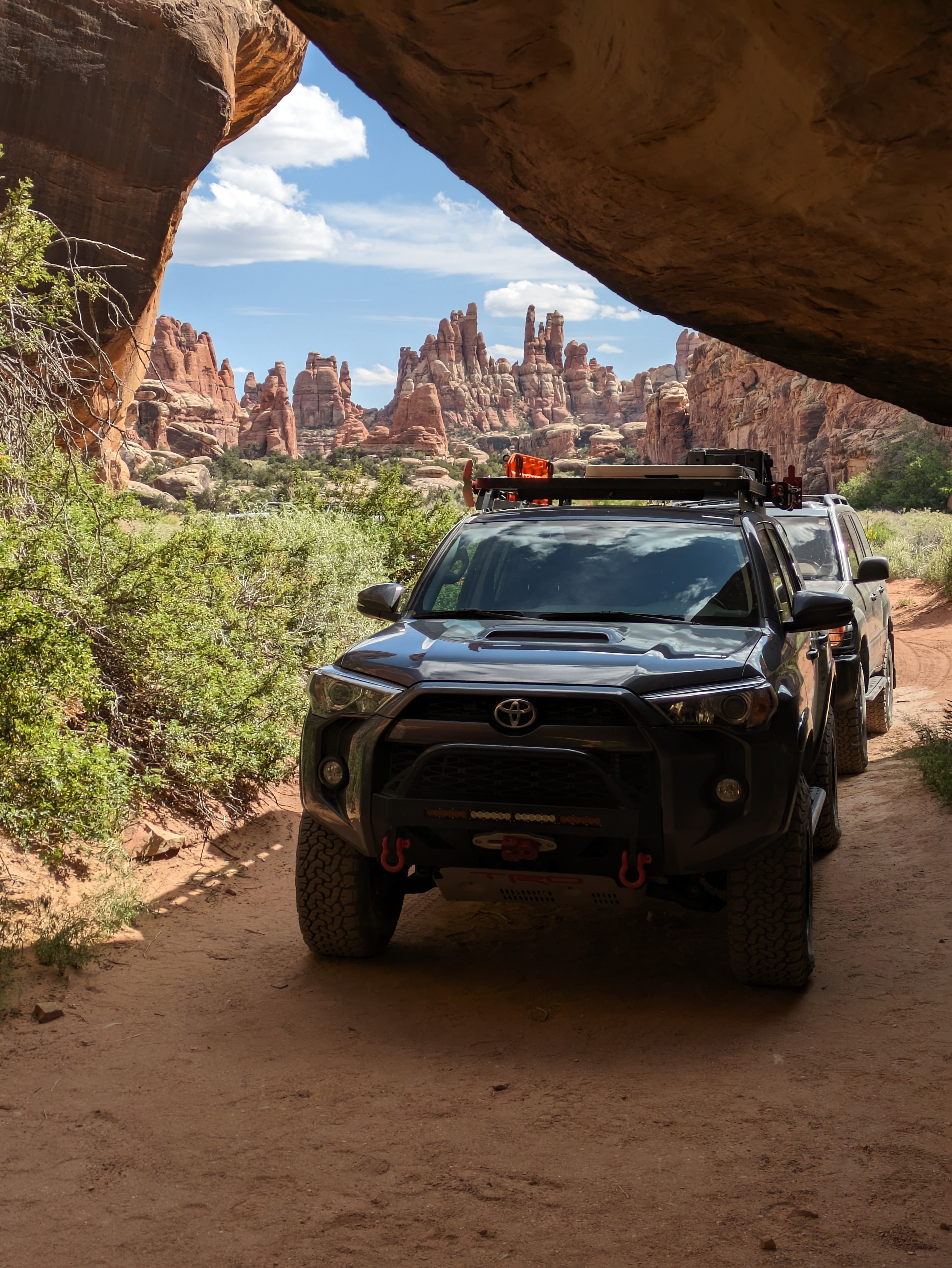
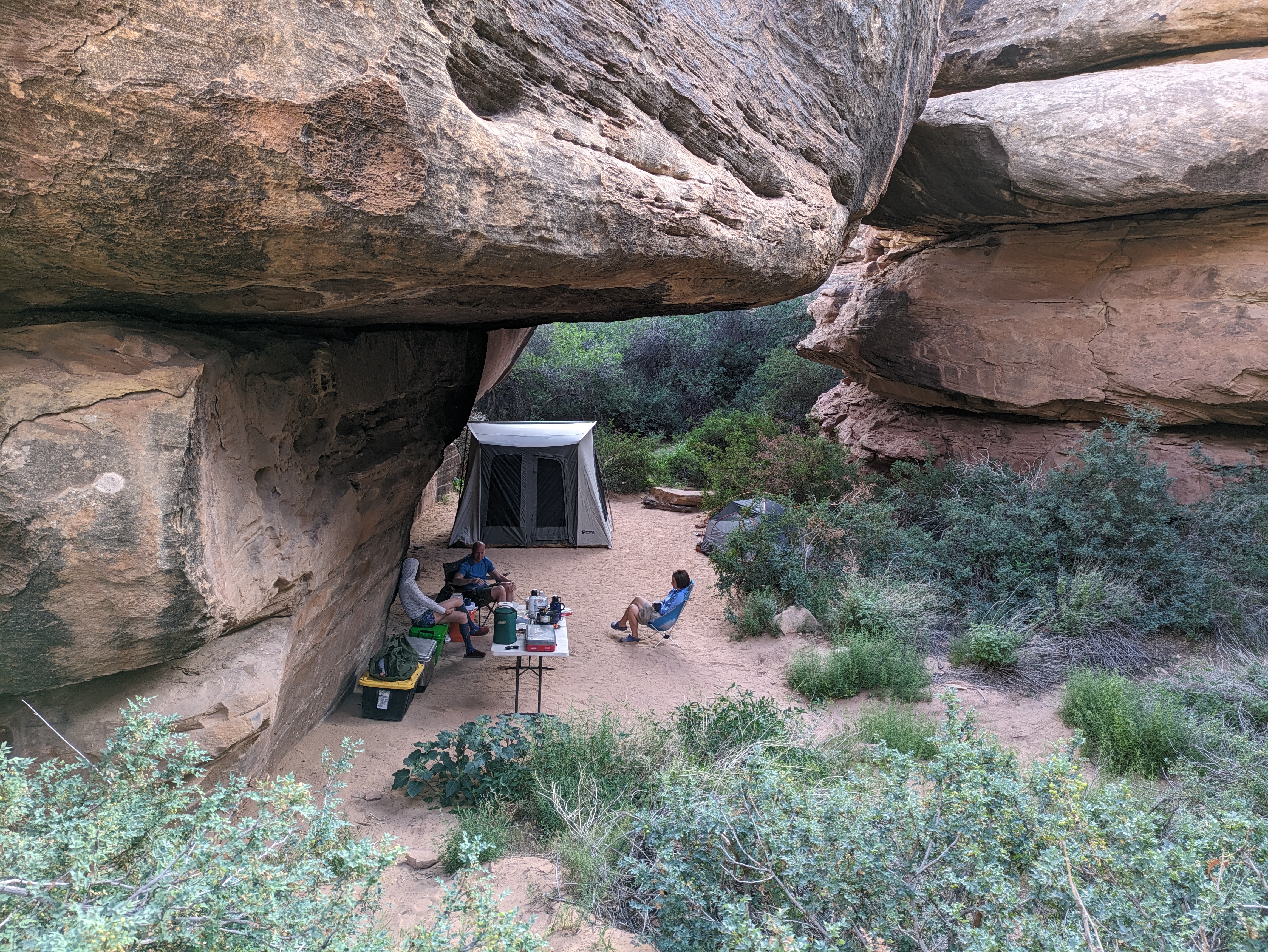
The Devil’s Kitchen Campground is literally right around the corner from The Squeeze, so we pulled in and setup camp as soon as everyone was through. As I expected, there was some confusion about who was camping and parking in which spots. Joe got the short end of the stick and had to park his car in a different spot than where we were camping. That’s just the way it goes with these larger groups. But I think he managed to have a good time anyway. Everybody seemed to interact well and get along, which made it a good experience.
Devil’s Lane and S.O.B. Hill
The next day we drove down Devil’s Lane to the petroglyphs. From there we worked our way up and over S.O.B. Hill and then down and around to The Joint.
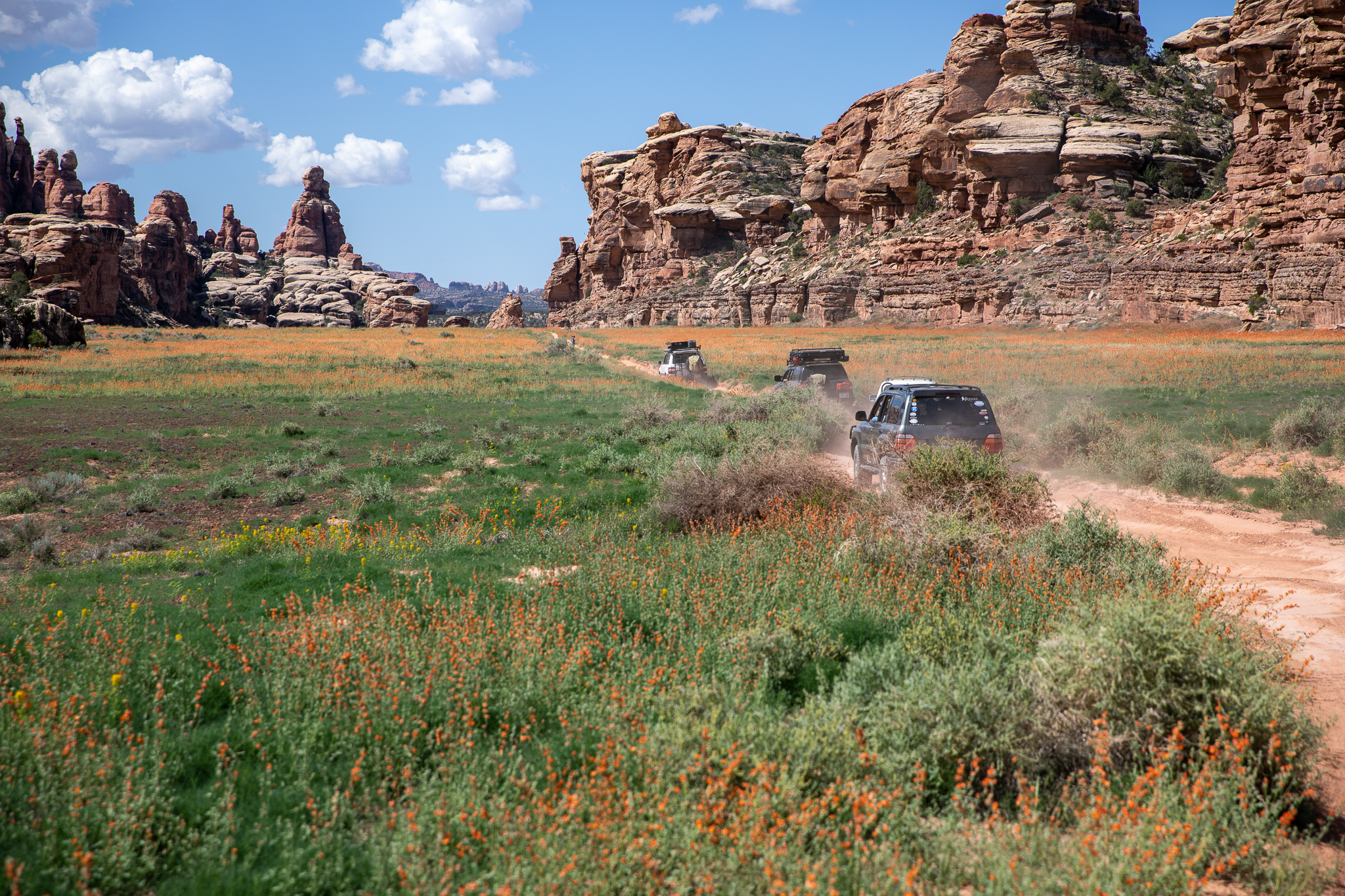
Devil’s Lane
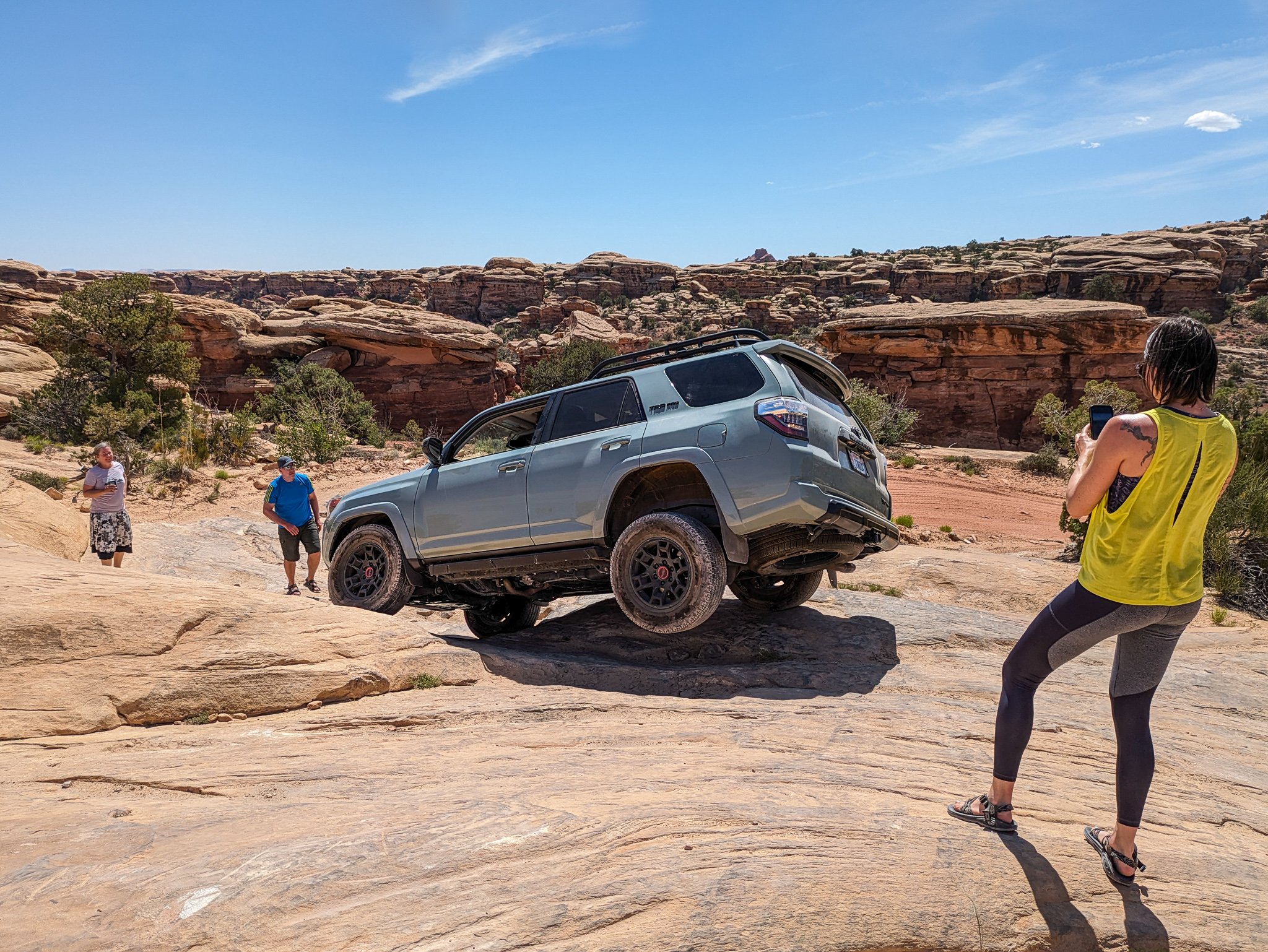
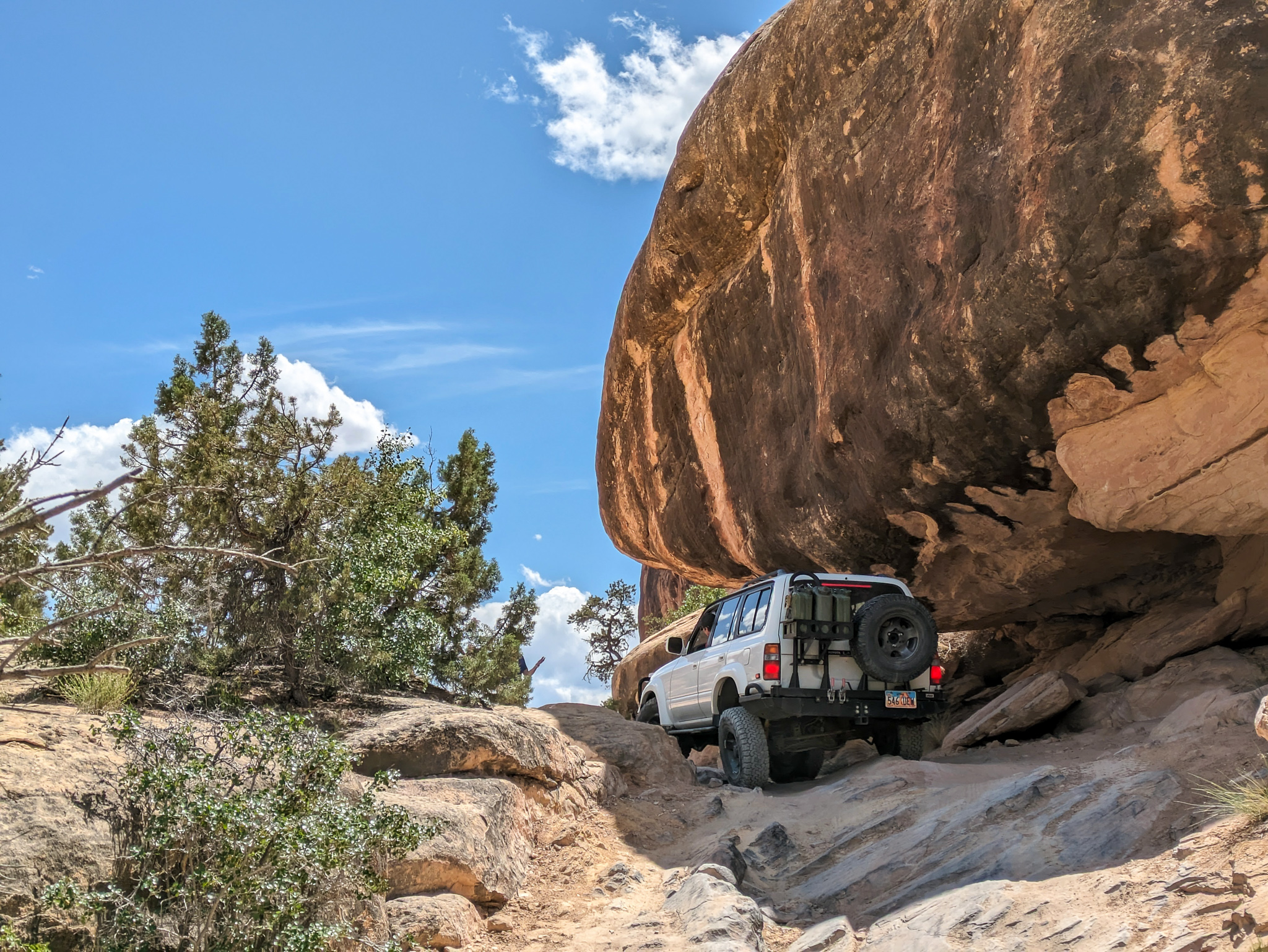
S.O.B. Hill is poorly named, if you ask me. The hill isn’t special or difficult. It isn’t even much of a hill. It’s only about 20 feet of climbing. BUT there is a very challenging obstacle with a very tight turn that takes you through a notch in the canyon wall at the summit, which is probably why it got the name S.O.B. It’s not the hill; it’s the obstacle at the summit.
Everybody needs a spotter and several adjustments to make the corner and get over some of the boulders. We have been through this obstacle a number of times and have tried several different lines and approaches. One of the Land Cruiser drivers even tried going through in reverse. I’m not sure there’s a magic solution that will make it easy, but it’s fun to try new things.
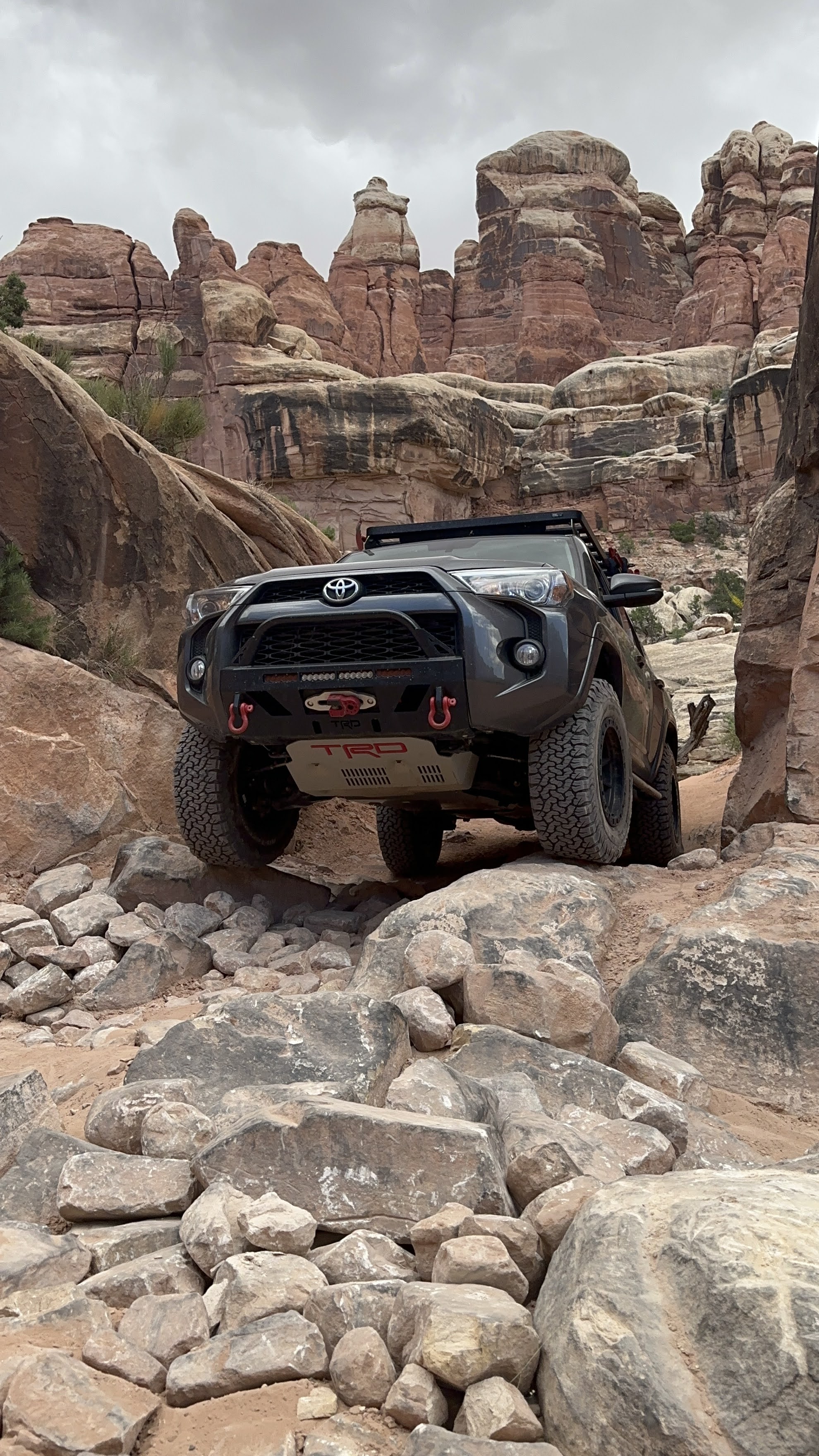
S.O.B. Hill
The road from there to The Joint is pretty tame after that. Somewhere along that very tame road I managed to slice through the sidewall of my front tire. I was probably going 20 miles per hour due to the lack of challenges on that section of road. I didn’t see anything and was a little confused and bewildered that I had done so much damage without even seeing what caused it. I walked back down the road where I came from to try and figure out what I hit. It was tough to guess what had happened, but I eventually saw a rock that had a very sharp edge on the side. With my tires aired down, the sidewall must have tried to grab that sharp rock, but the rock had other plans and tore right trough my tire, causing it to go completely flat almost immediately. I definitely learned my lesson: Always put your tire on top of the obstacle, or completely away from the obstacle. Never allow either side of your tire to grind against an obstacle.
These modified vehicles with larger tires and suspension kits that raise them up over obstacles are amazing, but when you need to work on a tire you have to lift them really high. The suspension has a long travel, which means you must lift the modified vehicle much higher than the stock version of the same vehicle. To do that lifting, you need what is known as a Hi-Lift Jack. I have used mine on several occasions in conjunction with a puncture repair kit. It’s amazing how easy it is to fix a flat tire under normal circumstances, but you can’t repair a tire after you destroy the sidewall like I did. That tire must be replaced, and that always means using your spare tire until you make it back to civilization. My spare tire had never been used previously and it’s not the same size or width as my all-terrain tires. That means running it at (mostly) full pressure and always driving slightly off-camber. So I was probably done doing anything too crazy the rest of this trip. My vehicle was a little less capable, but I didn’t have another spare tire, so I had to make it home on this set of tires.
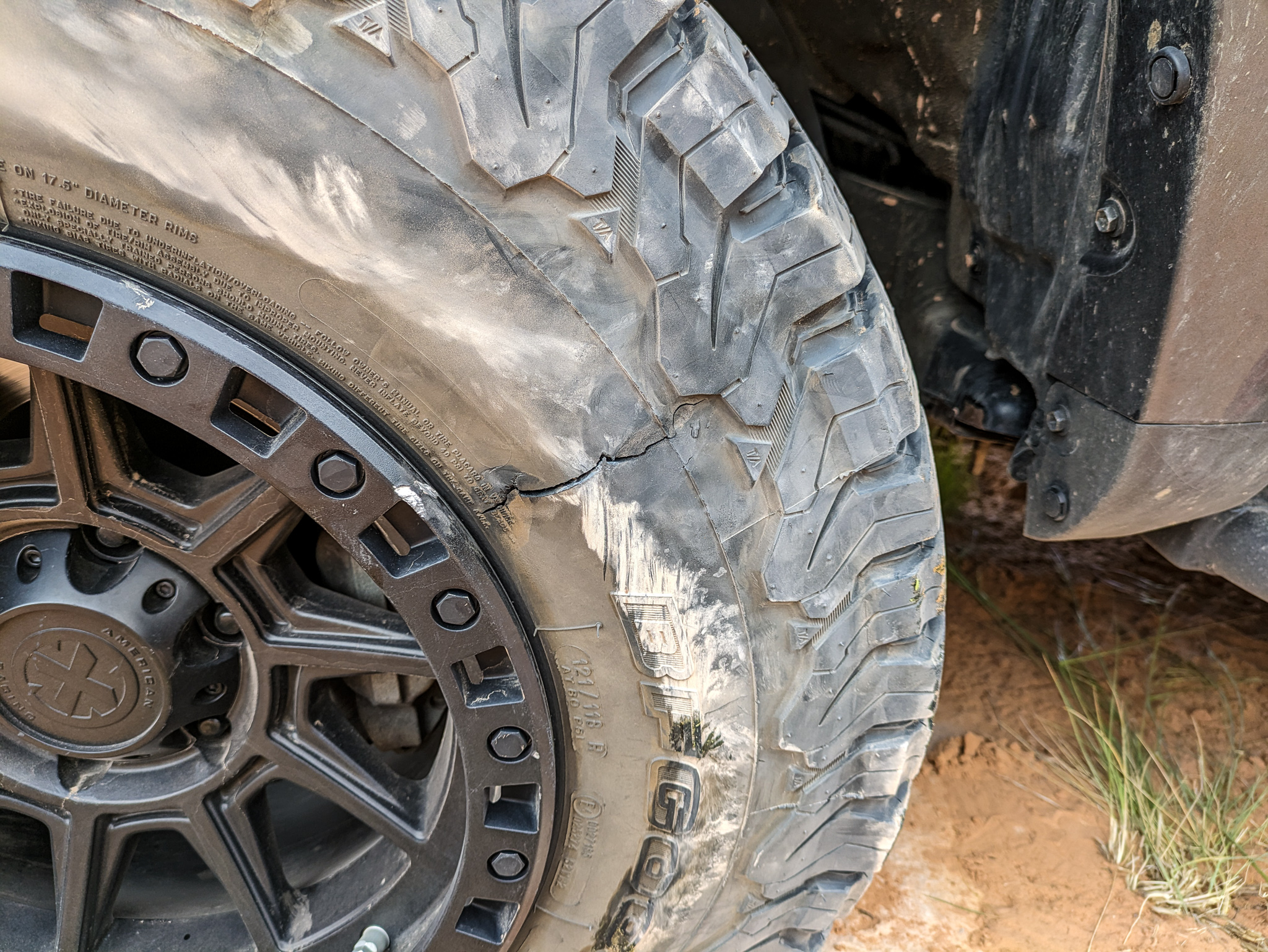
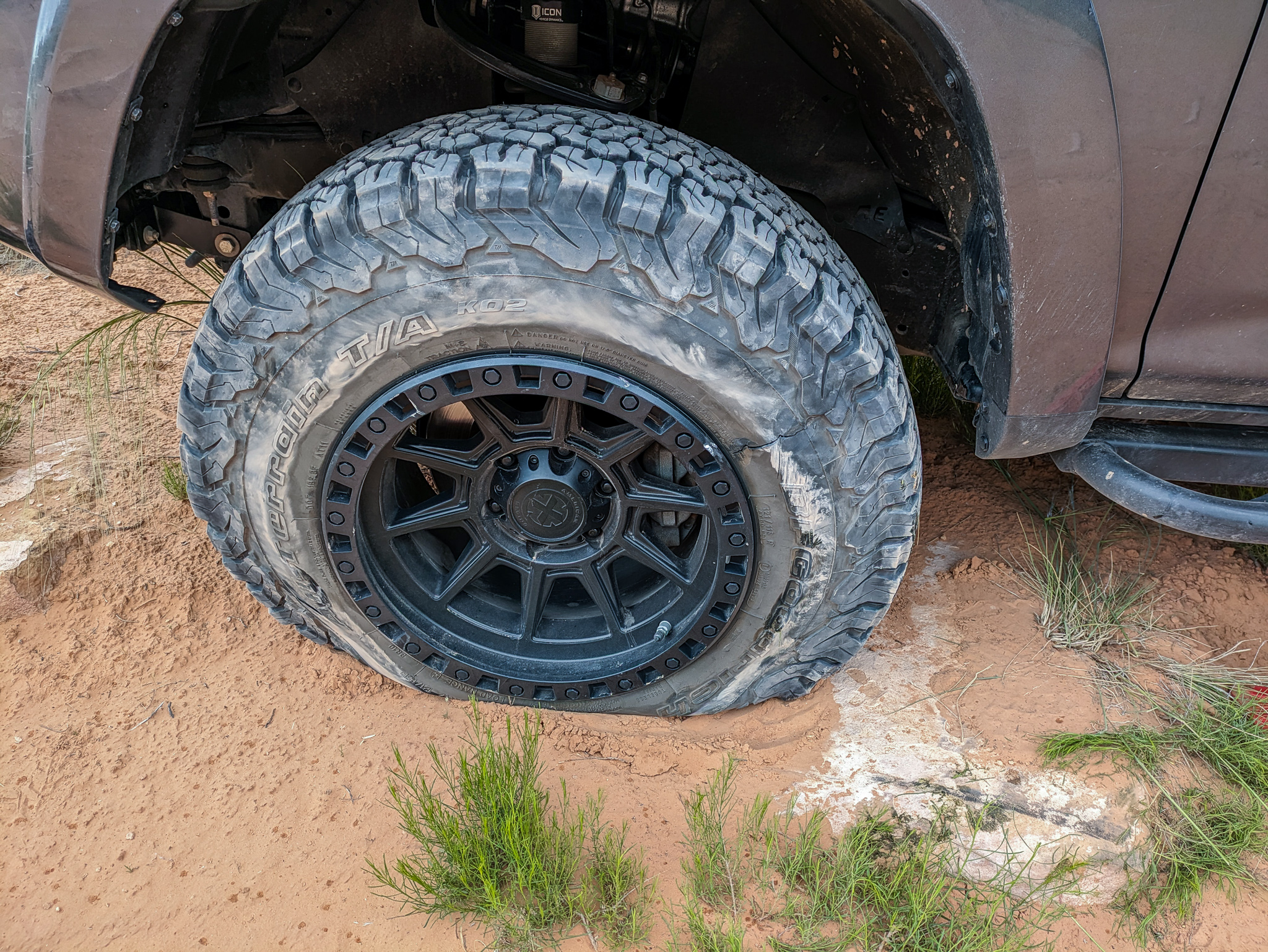
One lesson I may or may not have learned is about maintenance for my Hi-Lift Jack. It’s a critical piece of safety equipment and it gets constant abuse being mounted on the outside of the vehicle. All the sand and dust we drive through gets worked into the moving parts of the jack. I have mostly ignored doing any sort of maintence to the jack, because it has always performed perfectly when asked. Not today. In order to get it to lift my rig today, we had to manually manipulate some of the sliding parts to get it to actually lift. That was certainly interesting and I was glad to have friends around who are more mechanically minded than I am.
The Joint
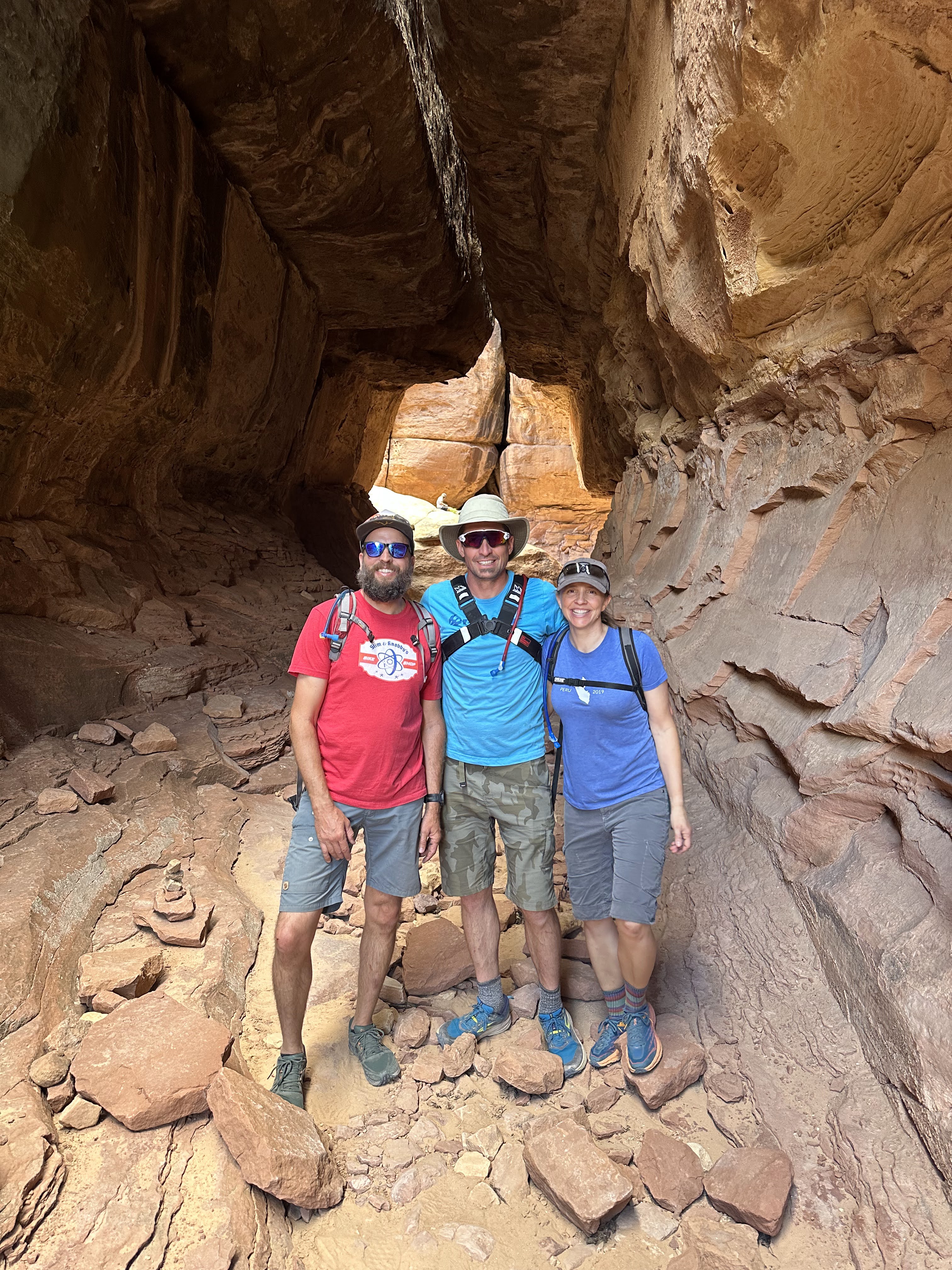
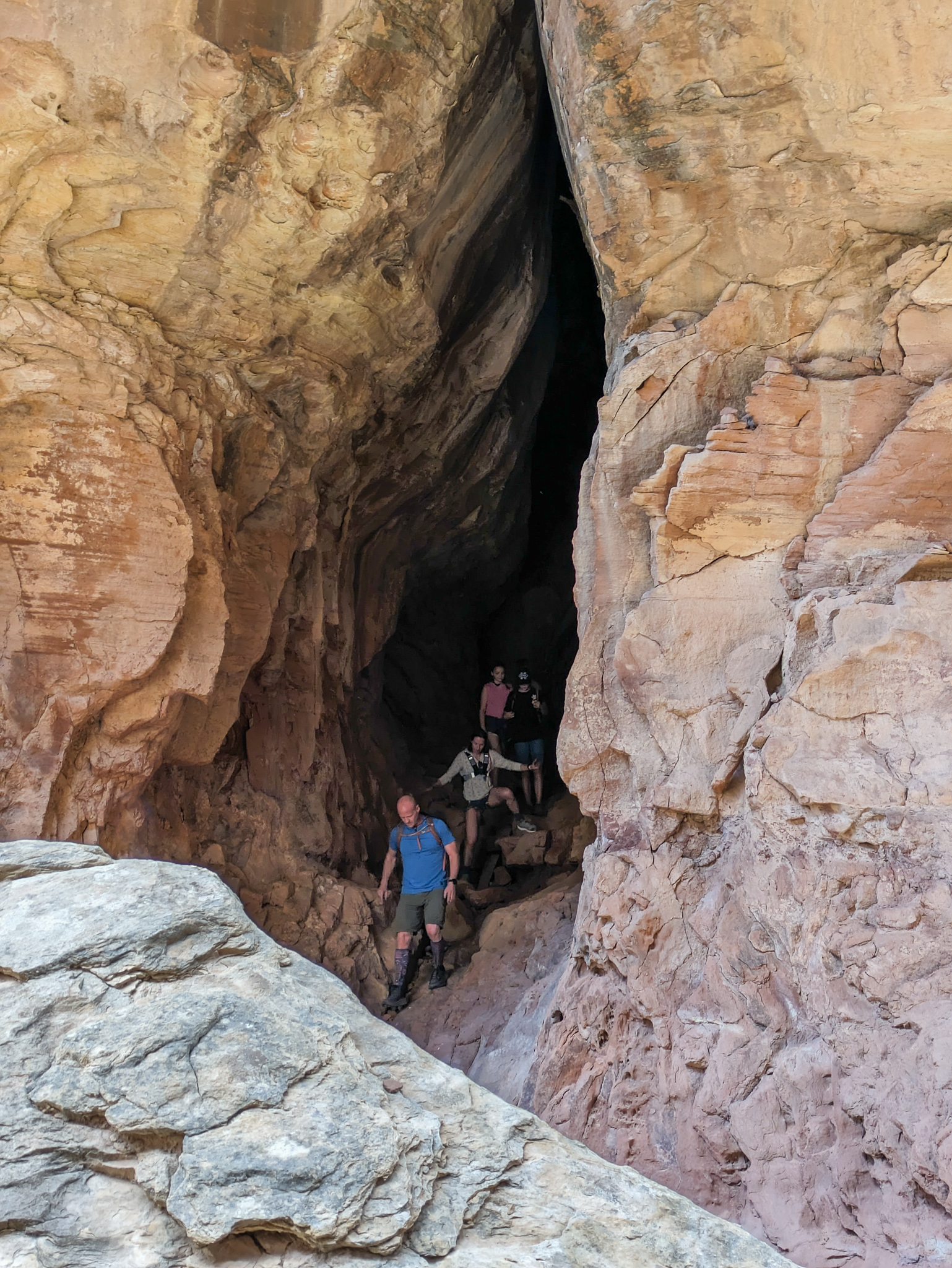
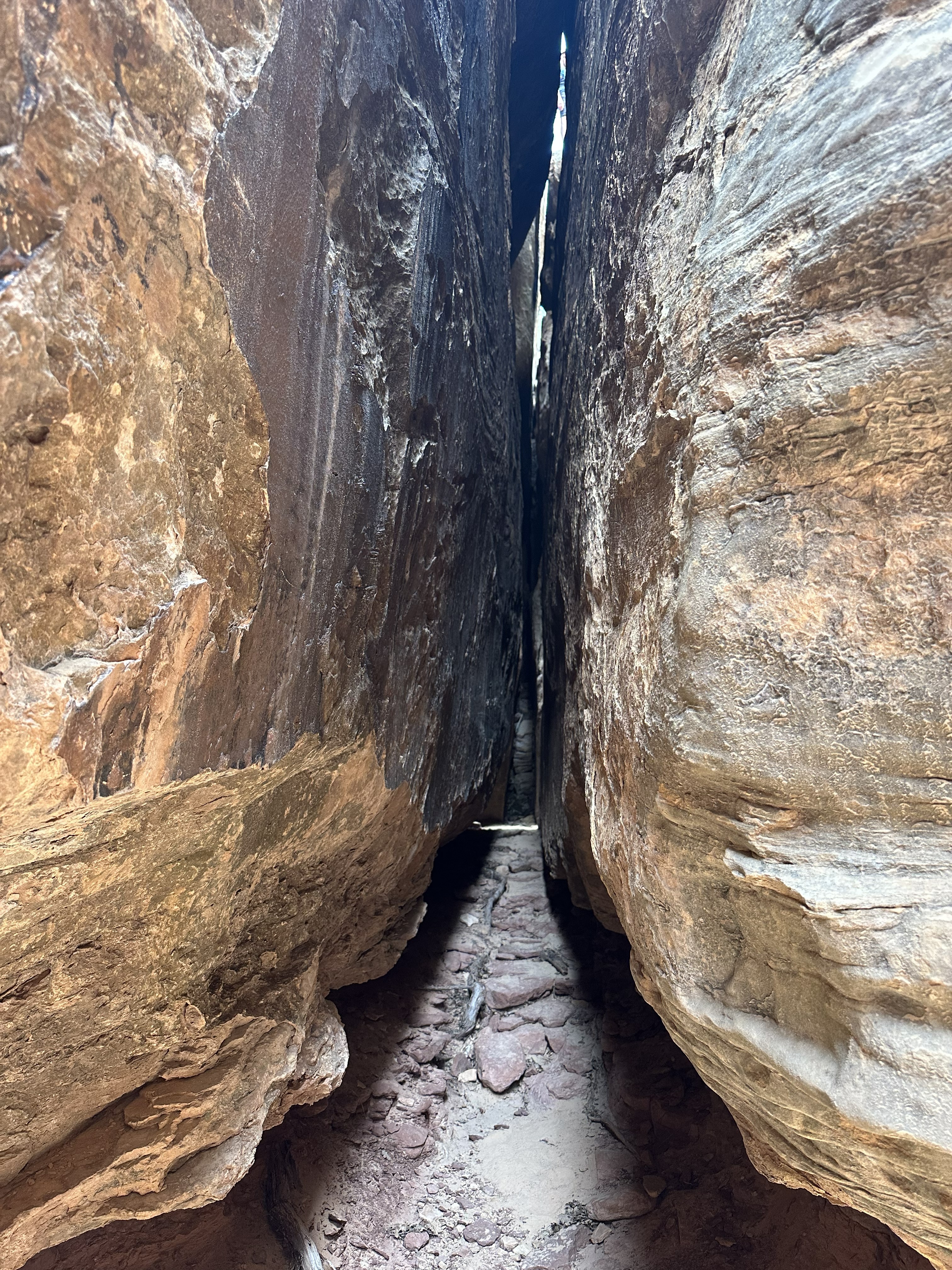
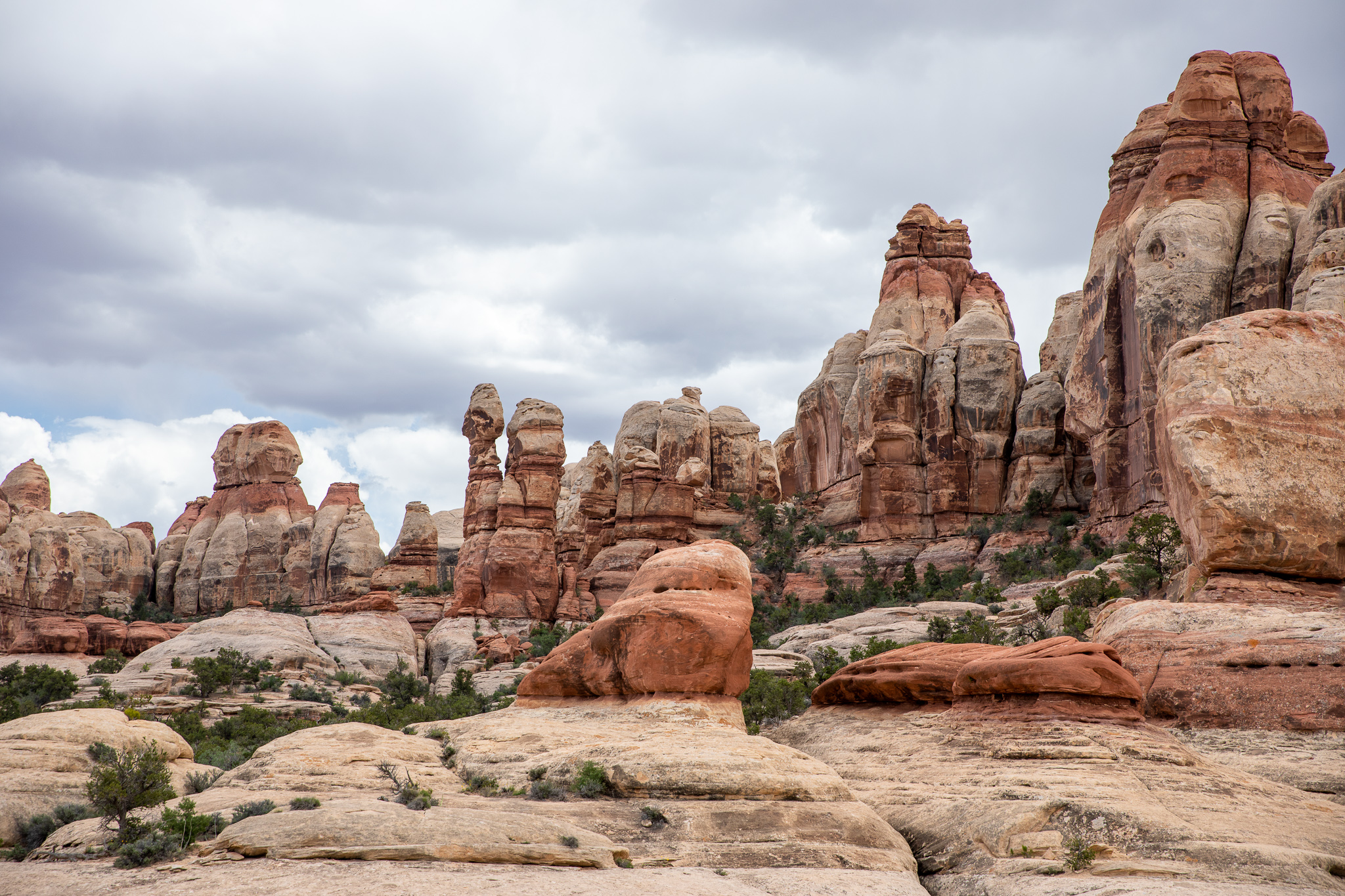
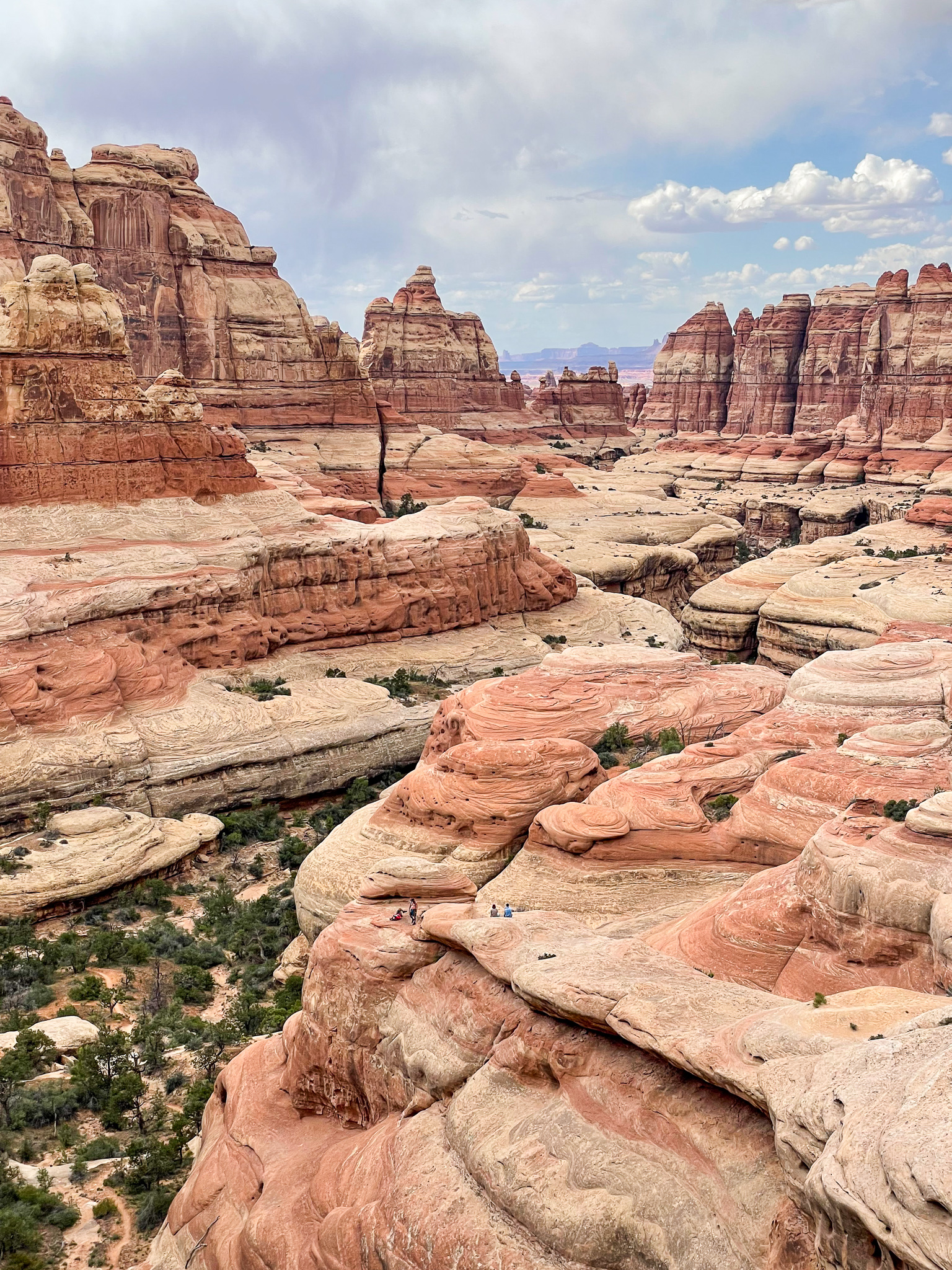
The Joint is a bit of a magical place. It is a series of dark narrow passageways through the sandstone formations. Some look and feel like tubes and tunnels, while others are like cracks that extend a hundred or more feet above you. Sometimes it feels a bit like a maze with all the cris-crossing tunnels and slot-cracks through the hoodoos and sheer sandstone faces. When you pop out from any of them, you’re surrounded by stunning views of the rest of those formations that you couldn’t see while you were basically inside them. It’s really something special.
Hiking up Elephant Canyon to Druid Arch
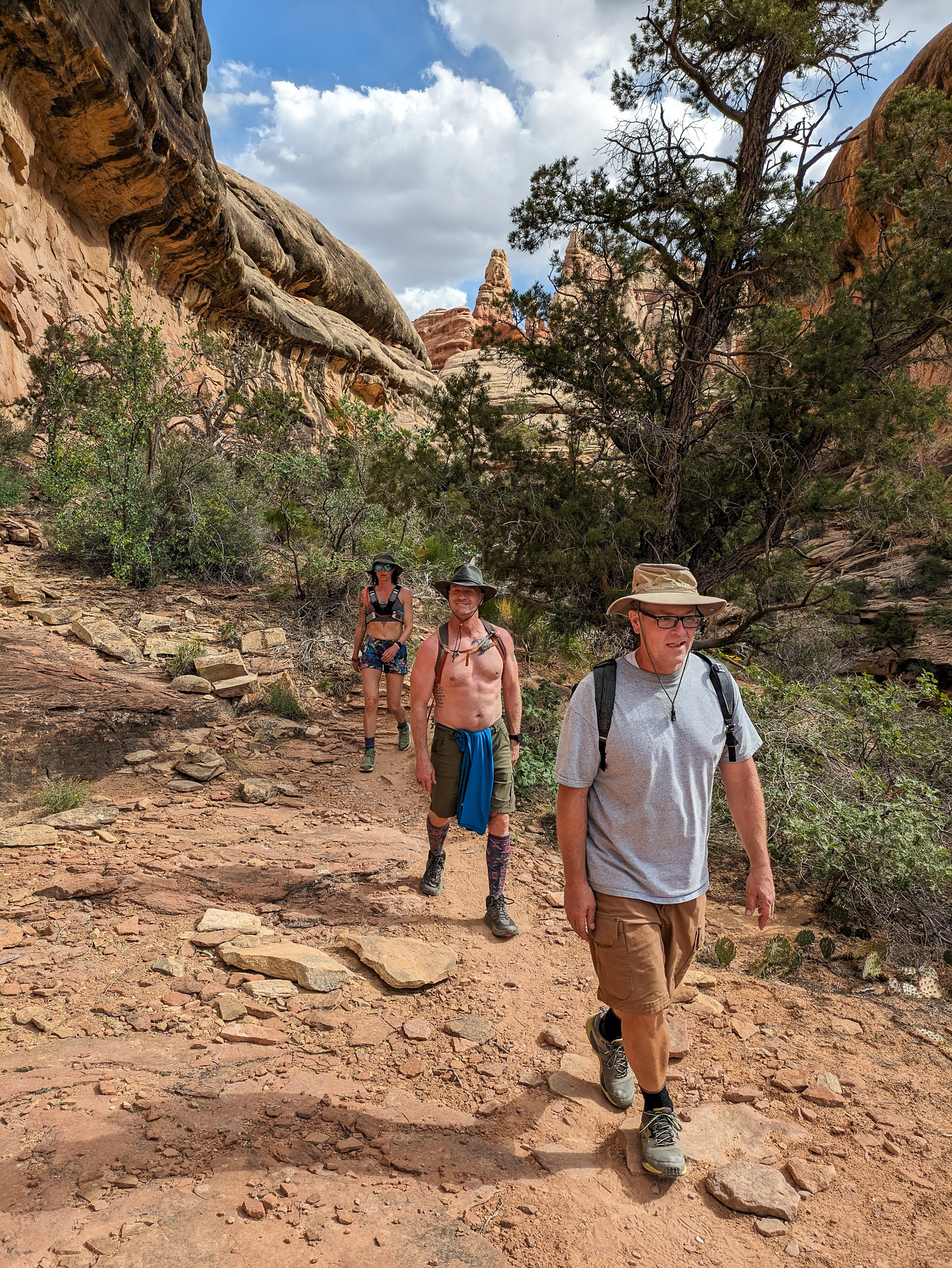
After spending a few hours exploring The Joint, we all sat up top for a bit, enjoying the scenery. Charmaine really wanted to share her recent experience in Elephant Canyon with me, so we decided to do the hike out to Druid Arch. At first it seemed we would be the only ones going, but eventually everyone decided it was the best option and everyone came alone. Well, everyone except Peter, Justin, and Walt.
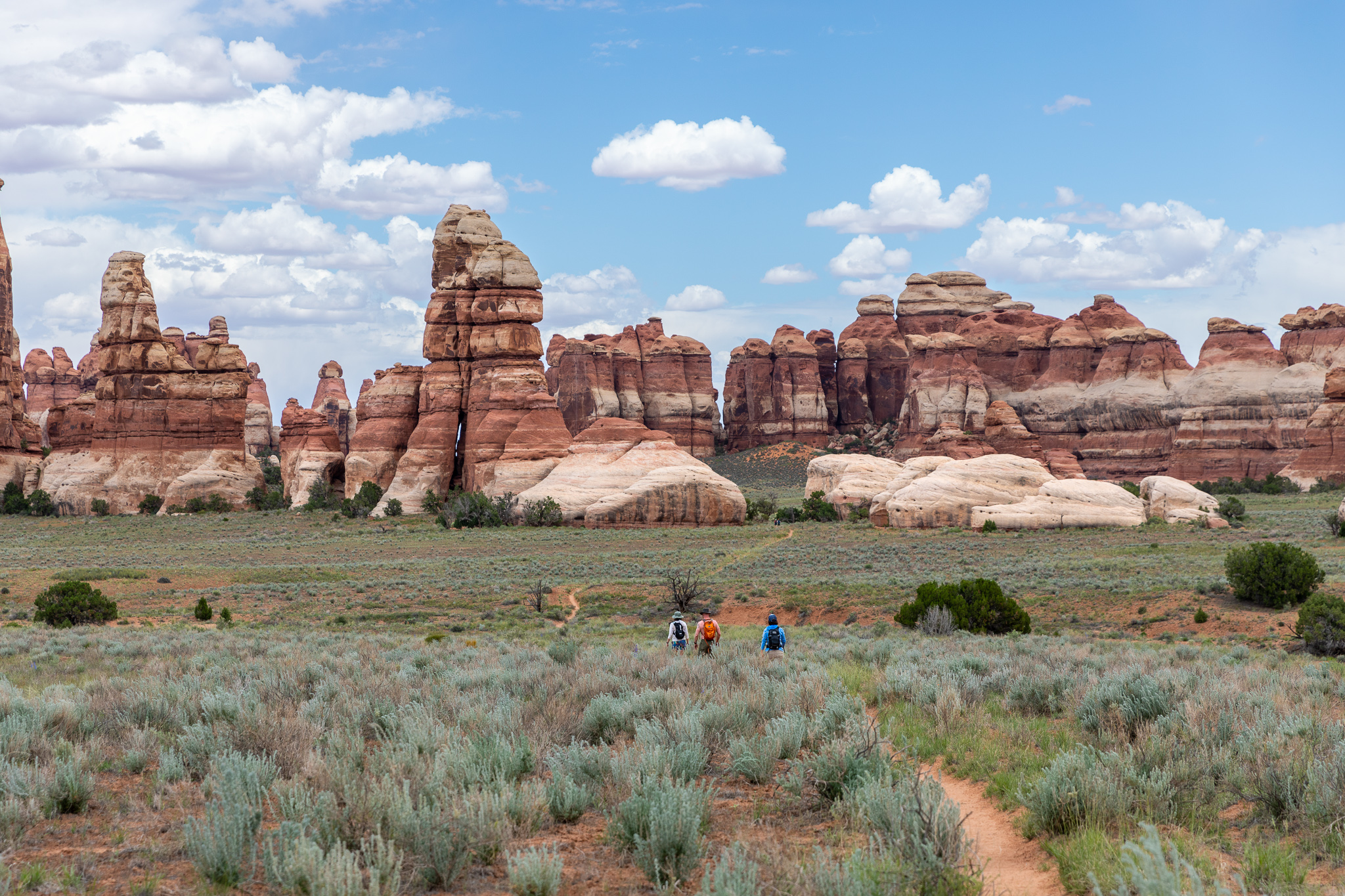
Chesler Park
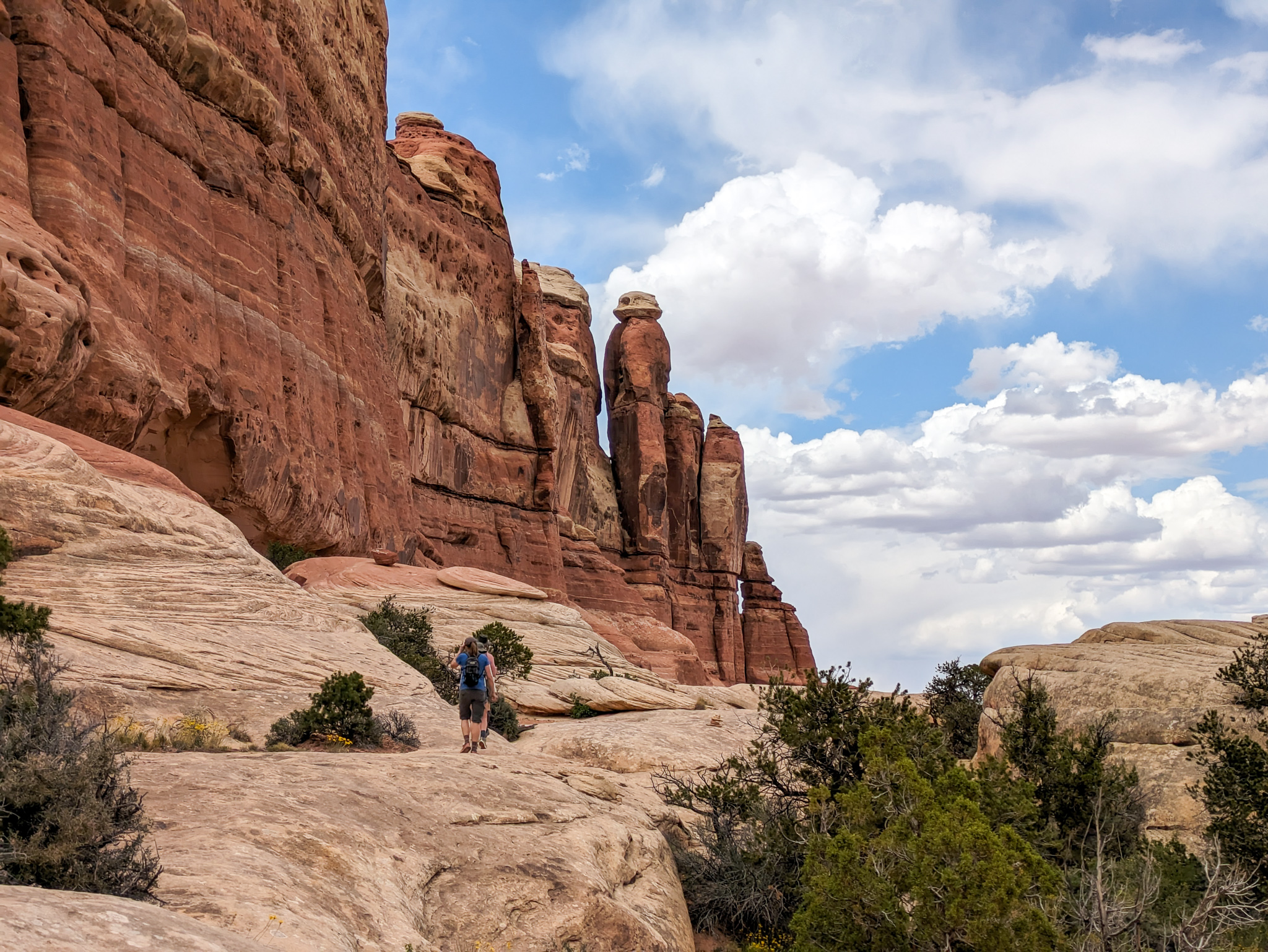
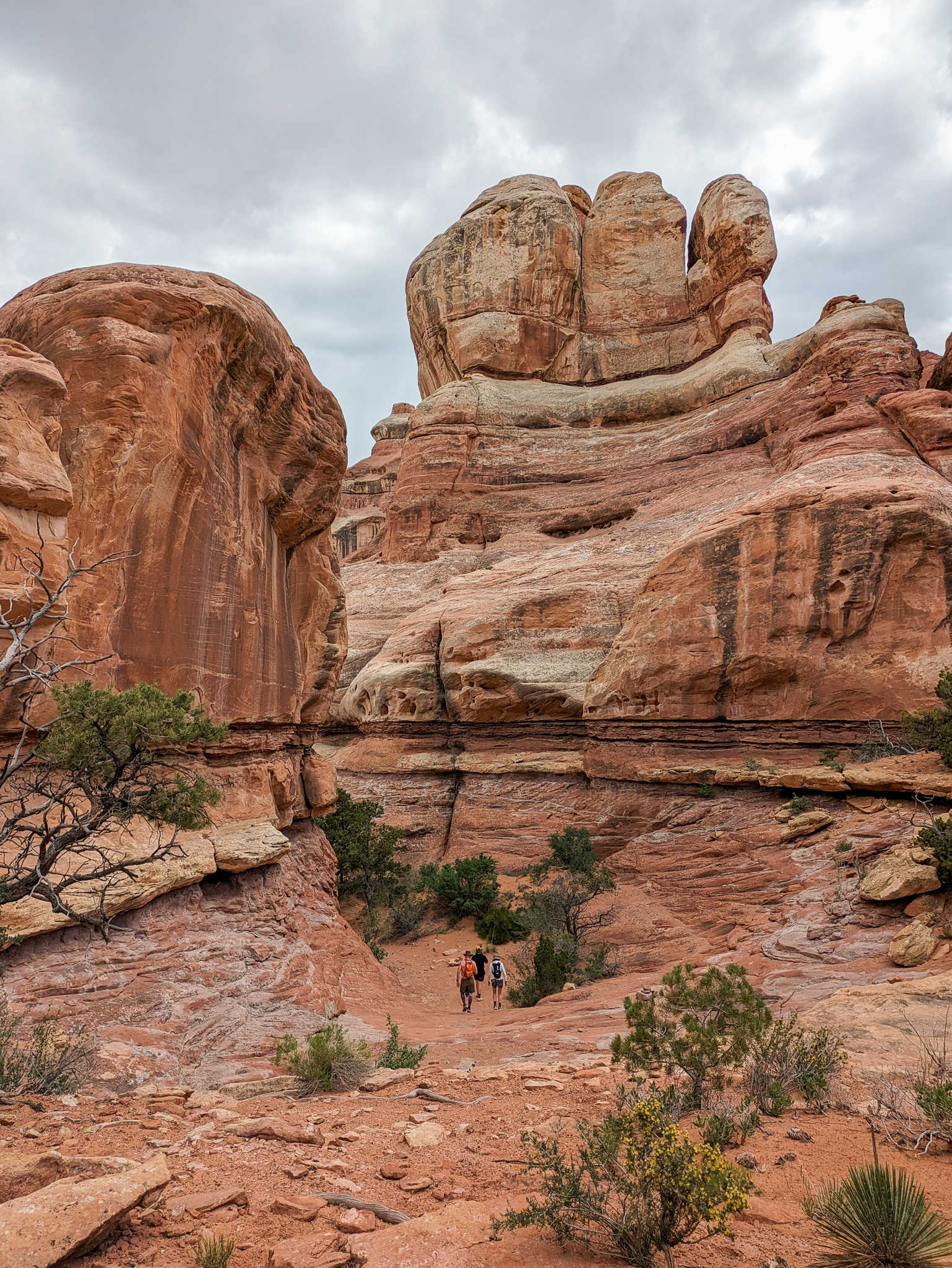
We left our vehicles parked at The Joint trailhead and walked out across Chesler Park, dropped down into Elephant Canyon, and hiked up the canyon until we came to Druid Arch. I wasn’t sure what to expect. Everything in Canyonlands is pretty wonderful, but hiking through Elephant Canyon was something else. It was pure magic. I think it’s one of my favorite hikes in Canyonlands, and that’s saying something.
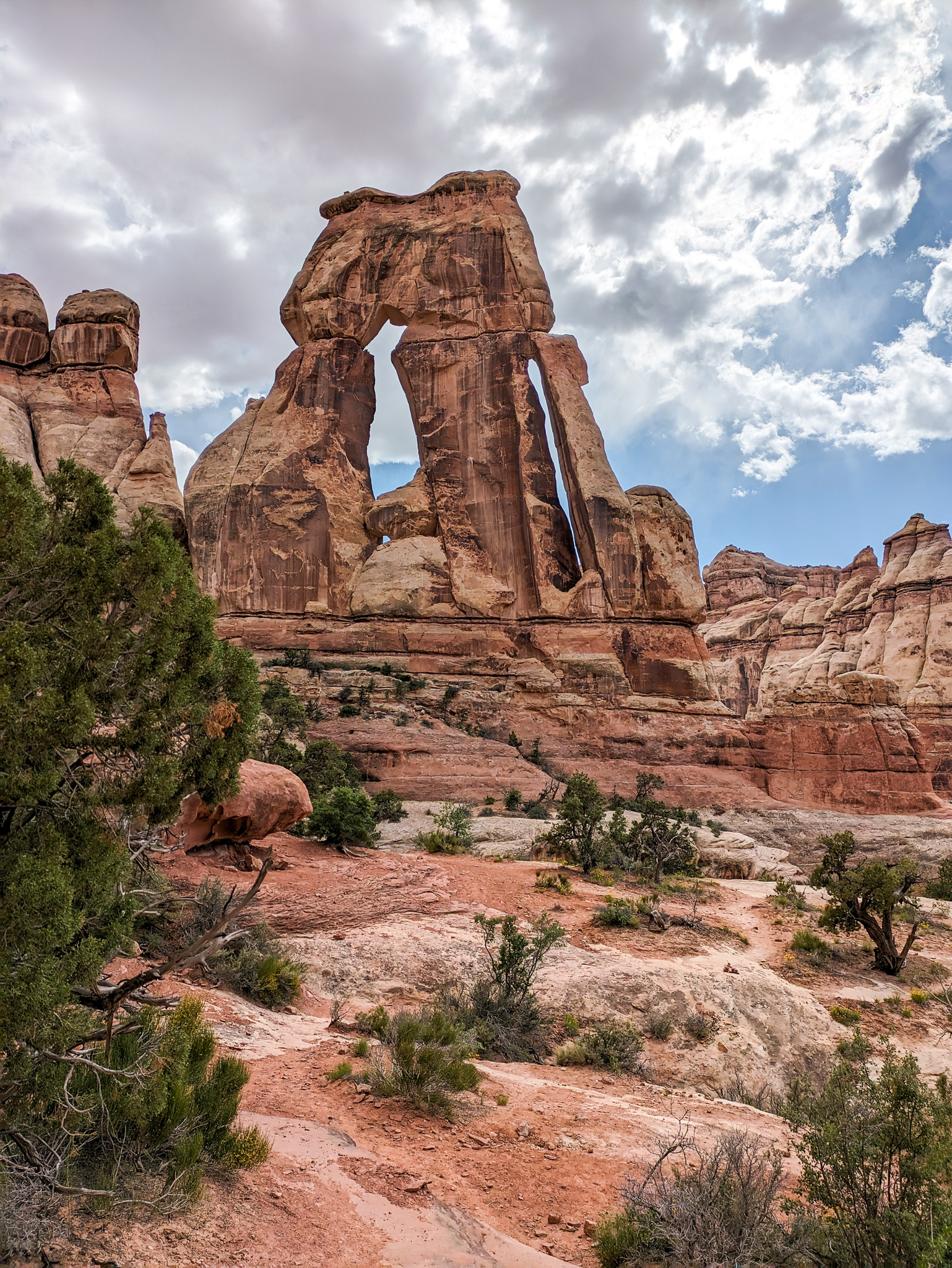
Druid Arch is huge. I was not expecting that. It’s at least 150 feet tall with an opening more than 85 feet tall. It looks a bit like a section of Stonehenge (hence the name), but I think it also looks a bit like a capital letter ‘A’. It’s not really the prettiest arch, but it’s a monster. It’s so big you could put Delicate Arch through the hole in the middle with 30 feet to spare. And the view of Elephant Canyon from Druid Arch is spectacular. We sat at the arch and looked down canyon for almost an hour before heading back out to our cars.
We ran into some unprepared hikers on our way back. They had no water and somehow thought they would be able to get some at the campsite they reserved. No. There is no water in this desert. There are no utilities of any kind at any of the campsites in The Needles. They are pretty good about warning you about that when you reserve a spot. Not only that, but they let you know you are expected to carry out all of your solid waste, even (especially) the stuff that comes out of you. There are a few pit toilets strewn about, but you’re not allowed to dig a hole and bury your poop. If you don’t use a park-provided pit toilet, you must carry your waste out in some type of sealed container. Anyway, we were happy to share our water with those nearly lost people. We had a lot more water with us. Brett even had a big tank of water mounted on top of his rack, which let us help yet another set of unprepared hikers waiting by our cars in the parking lot when we got back. They had been waiting for about an hour, hoping we would return with enough water to share. Wow. People. It’s your life. Take some precautions.
The Confluence
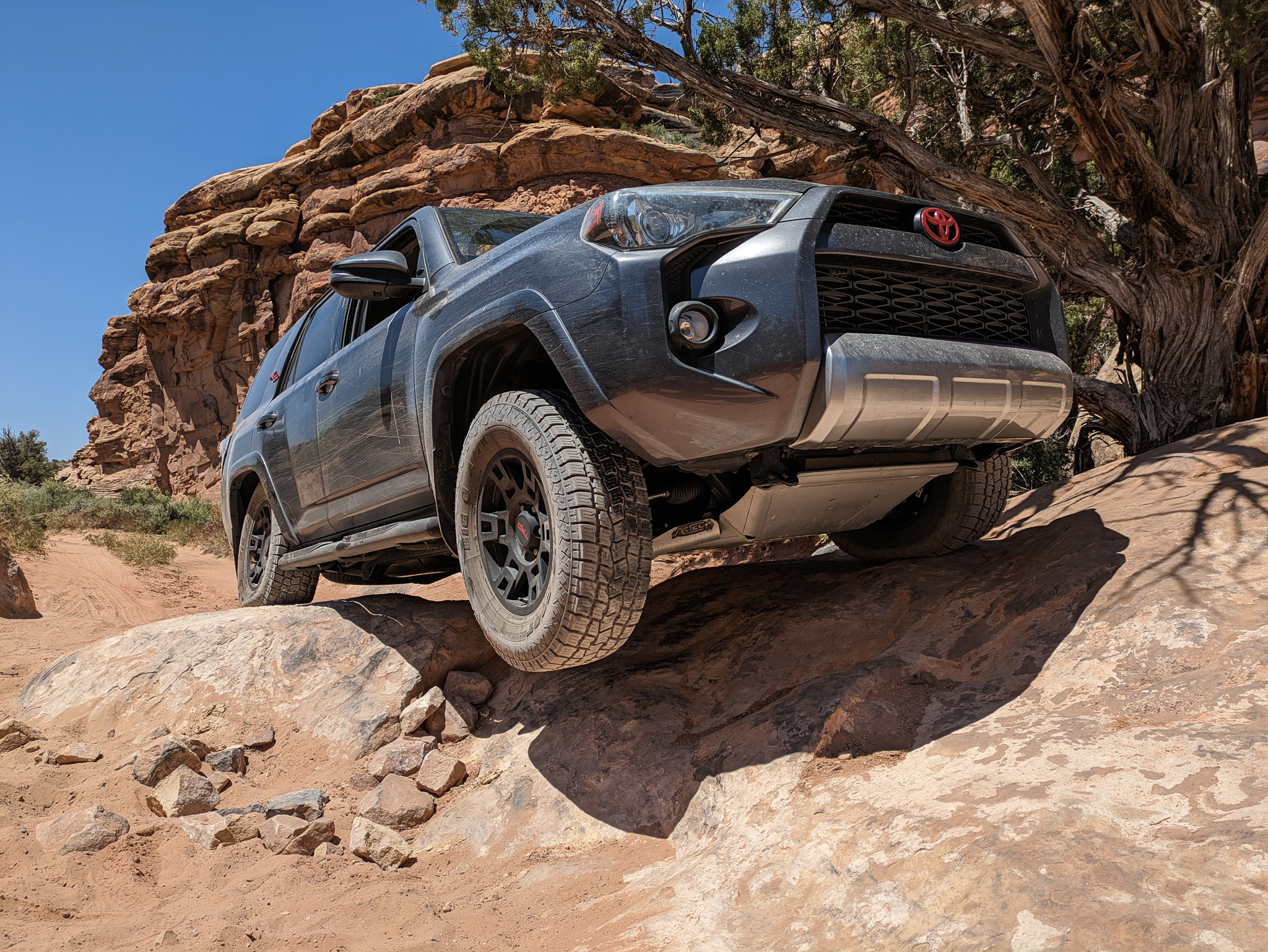
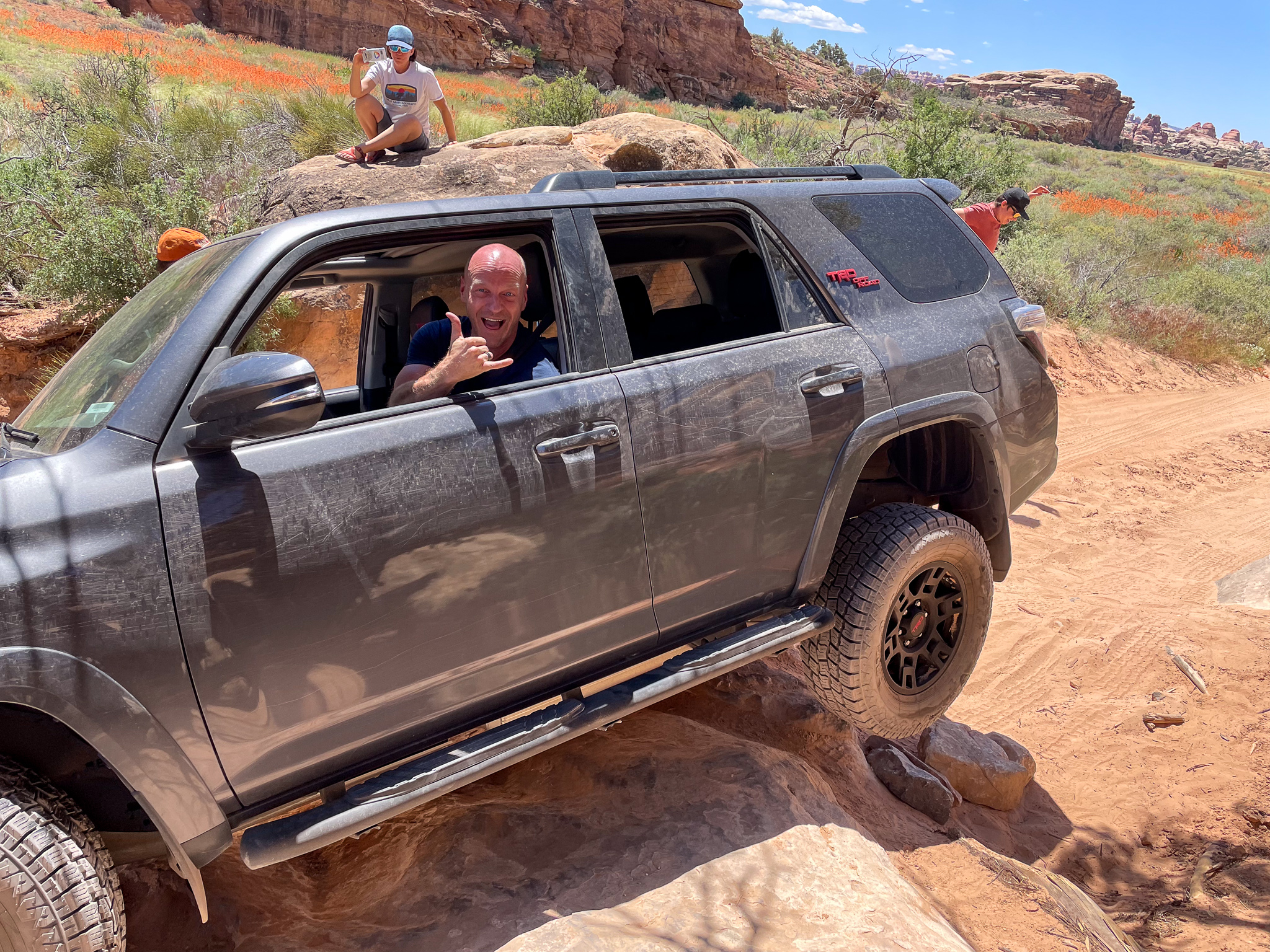
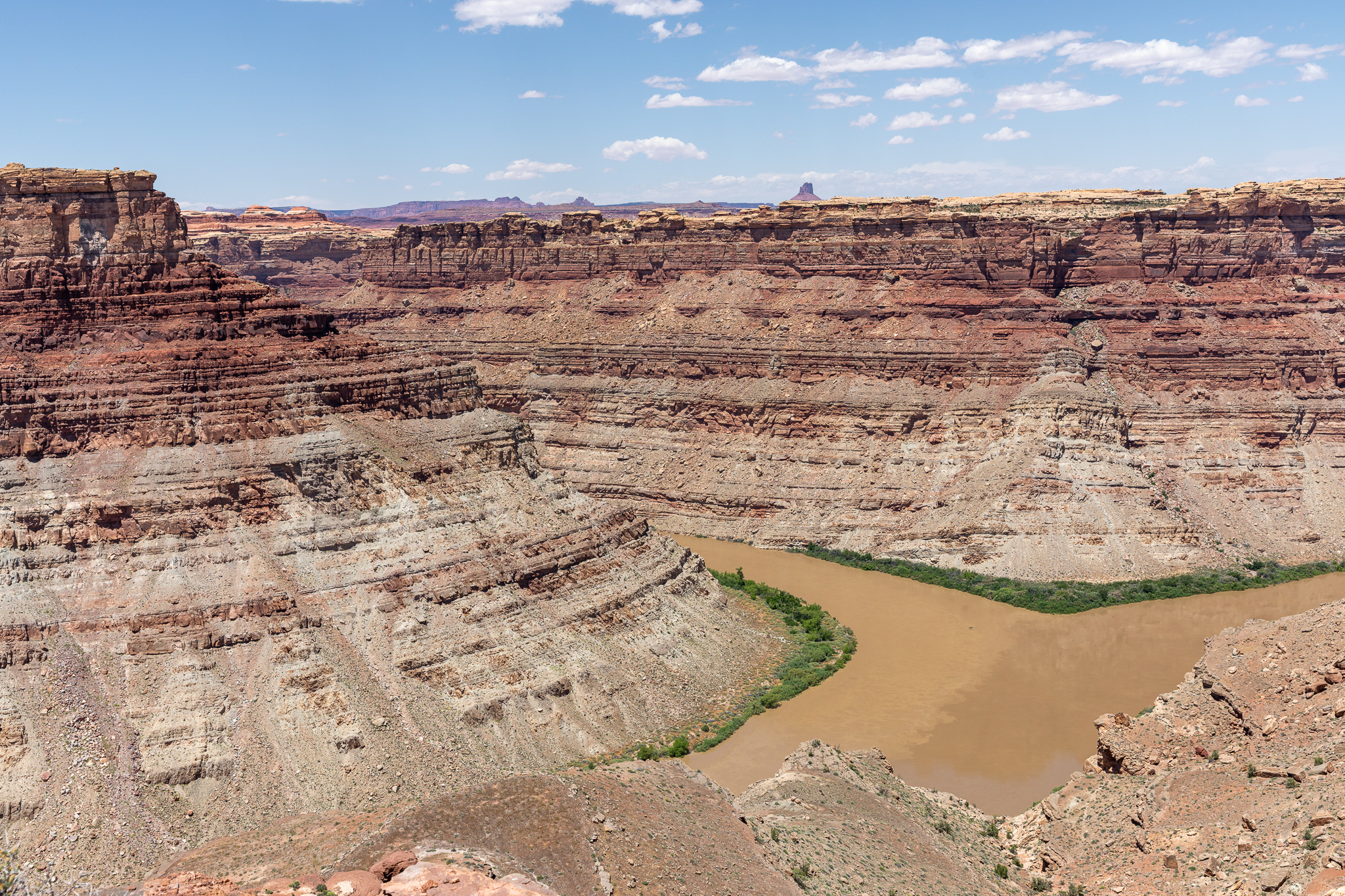
On our final day in the park, we went out to The Confluence, which is where the Green River joins the Colorado River and you can see the difference in color between the two rivers as they get mixed together. The trek out and back turned out to be a much trickier trail than I remembered. My rig was still sidelined because of the spare tire so Joe decided he would drive and we would ride with him. It was a fun time, but getting Joe’s mostly-stock 4Runner over some of the obstacles was a challenge that wouldn’t have succeeded if it were not for a team effort. Coming back was the hardest part. We were forced to winch his rig over a big obstacle where he had gotten high centered. Hopefully his rig survived the abuse.
The next day we went home. But that didn’t mean there wasn’t time for some shenanigans on our way out.